
Pop-up retail site handoff field note · Source review October 30, 2026
A pop-up trailer should not leave for a venue with only an address and an arrival time. The transport lead needs a confirmed approach and staging position. The venue team needs the operating footprint and public-separation plan. The retail operator needs to know who releases utilities, opens the customer side and signs the departure record.
Put those answers in one site handoff record before dispatch. If the approach route, placement area or decision owner is still unknown, hold the move and close that item first.
This field note does not replace a route survey, engineered ground or anchoring review, venue approval, local permit, fire review, accessibility determination, utility design or the trailer and tow-vehicle instructions. The responsible venue, transport, builder and qualified technical parties must review the actual unit and site.
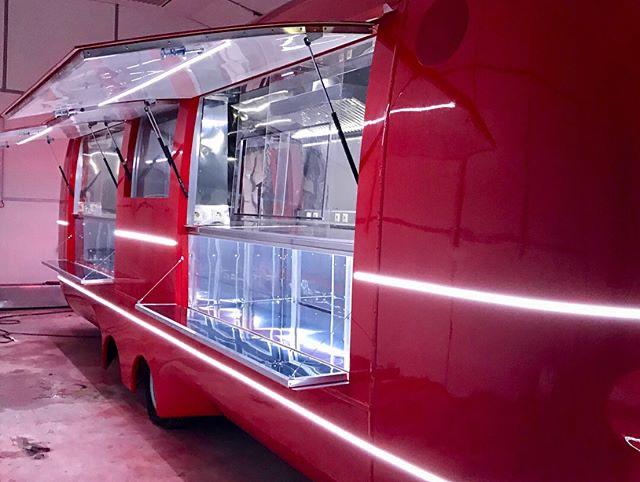
The proposed photograph is an archive view of the Flowerhead mobile retail project in a temporary indoor event setting. It shows an open customer display, side entry, illuminated body, rear support and merchandise placed outside the unit. It does not establish the arrival route, setup method, surface capacity, clearance, approval status or current U.S. specification.
01Start with the last 200 feet
The street address rarely describes the part of the move that causes trouble. Record the gate, loading entrance or service road the driver must use, then trace the final approach to the proposed position.
The site record should identify:
- the person who confirmed the route and the date of that confirmation;
- the gate, corner, overhead feature or grade that needs a closer review;
- the staging position used while the venue clears people and equipment;
- the direction of the final backing or pull-through move;
- the person authorized to stop or redirect placement.
Photographs should follow the driver's sequence. Capture the entrance, the tightest point, the staging area and the marked operating position. A wide venue photograph without that sequence leaves the transport team to interpret the site after arrival.
NHTSA advises drivers to plan the route before a trip and to inspect the vehicle, tires and trailer lights. The tow operator and equipment instructions control the actual pre-trip check. The site handoff record adds the venue-specific information that a general road-safety check cannot supply.
02Mark two footprints
The travel position and operating position are different records. Draw both.
The travel footprint covers the unit as it arrives, including the tow vehicle and the movement needed to reach the final position. The operating footprint covers every customer-facing element used after placement: entry steps, doors, awnings, service panels, exterior displays, queue space and any approved barriers.
The venue team should mark the operating footprint on a current site plan or annotated photograph. The operator then checks the customer path and staff access against the actual configuration. Do not infer a clear route from a beauty shot of the deployed unit.
Use TBD where a dimension or clearance has not been verified. Name the person who must supply it. A blank cell looks finished during a hurried handoff; a named open item does not.
03Record the surface without approving it by photograph
Describe the proposed position: pavement, slab, compacted surface or another condition observed on the review date. Note visible slope, drains, curbs, soft shoulders and recent work that may change the route or placement area.
The description is an intake record. A photograph does not prove bearing capacity, level, anchoring suitability or permission to deploy supports. When the unit, support system or venue condition requires a technical decision, send the actual loads, support details and site information to the qualified party responsible for that decision.
If the ground condition changes after the review, reopen the placement record. Do not carry the prior approval forward by assumption.
04Give every setup action one owner
Arrival goes faster when the responsibility map uses verbs instead of department names. Assign who will:
| Setup action | Record before dispatch | Closeout evidence |
|---|---|---|
| Control the placement area | Named venue contact, access time and method for keeping the area clear | Time-stamped arrival photograph and contact acknowledgment |
| Direct the final move | Named transport lead and agreed hand signals or communication method | Placement accepted by the named venue representative |
| Place approved supports or leveling equipment | Responsible party, applicable instructions and hold point | Photograph of the final condition plus any required technical record |
| Open steps, doors, awnings and displays | Operator, sequence and clearance boundary | Operating-state photographs from the public approach and staff side |
| Connect utilities | Supply owner, connection point, qualified installer when required and test owner | Connection and functional-test record tied to the site and date |
| Release the public area | Venue decision owner and the inspections or checks required by that venue | Written release or other record required by the venue |
| Return the unit to travel state | Operator and transport lead | Departure photographs and signed travel-state check |
If two companies share an action, split the action. "Venue and operator" does not show who turns on the supply, who checks the connection or who can stop opening.
05Keep vehicle records separate from venue permission
The venue's approval of a placement does not certify the trailer, and a vehicle certification label does not approve an event site. Keep those evidence paths distinct.
Under 49 CFR Parts 567 and 568, certification and multi-stage manufacturing duties follow the regulated roles and the work performed on the vehicle. NHTSA also tells trailer buyers to look for the certification label and verify the manufacturer record. Those federal vehicle records belong in the unit file.
Site access, placement, utilities, customer use and local approvals belong to the actual venue and jurisdiction. The handoff record should point to each controlling document rather than combine them into one generic approved status.
MOBITRUCK prepares the contracted shell system at its manufacturing operation in Estonia. In the current U.S. path, Concession Nation assembles the rolling shell and, within its signed scope, assigns the American VIN and performs the applicable vehicle-certification work for its stage. Concession Nation or another qualified U.S. builder may complete the mobile retail interior under a separate scope. The signed proposal and unit records control the responsibility split for a specific project.
06Close the same record before departure
The site handoff record should return with the unit. Before departure, confirm that customer-facing equipment is closed, loose merchandise and cargo are secured, utilities are disconnected by the responsible party and the travel path is clear.
NHTSA states that the driver is responsible for securing cargo so it cannot drop, shift, leak or escape. The unit-specific fixture schedule should identify every installed or loose item that changes between operating and travel states. Use the fixture and travel-restraint schedule for that record.
Record damage, missing parts, changed site conditions and unresolved utility issues before the transport lead accepts the unit. A departure photograph should show the actual travel state, not the earlier operating setup.
07Download the handoff record
Download the pop-up retail site handoff plan (CSV)
The template keeps the route, placement, public-separation, utility and departure questions in one row per site. Add links to marked plans and photographs in the evidence field. Keep one named owner and due date for every open item.
Use the mobile retail trailer planning guide for customer visit, merchandising, inventory and checkout decisions. Pair this handoff with the mobile showroom AV and power brief when site supply and demonstration equipment must be coordinated.
Request a mobile retail project review with the current handoff record, site photographs, marked placement area and responsibility map. The project team can review the shell and handoff scope while the venue, transport provider and qualified technical parties close the site-specific decisions.
08Sources checked October 30, 2026
- MOBITRUCK mobile retail trailers: current mobile store, showroom and launch-space context; checked October 30, 2026.
- MOBITRUCK manufacturing: current Estonia shell-system and U.S. rolling-shell / final-completion responsibility sequence; checked October 30, 2026.
- NHTSA summer driving tips: route planning, vehicle inspection, tire and trailer-light reminders; checked October 30, 2026.
- NHTSA: Secure Your Load: driver responsibility and cargo-securement guidance; checked October 30, 2026.
- NHTSA trailer certification alert: certification-label and manufacturer-record reminder for trailer buyers; checked October 30, 2026.
- 49 CFR Part 567: Certification: federal vehicle-certification roles and label framework; checked October 30, 2026.
- 49 CFR Part 568: Vehicles Manufactured in Two or More Stages: incomplete, intermediate and final-stage manufacturer responsibilities and records; checked October 30, 2026.
 Tour planning
 Buyer guide
 Release tool