
Give the trailer team an operating tour, not just a campaign deck. Name the venues, move schedule, setup crew, audience interaction, staff positions, equipment, inventory, power, connectivity, access, weather plan and closeout routine. Then choose the shell and builder handoff. A promotional trailer that photographs well at one stop can still be difficult to place, open, run or pack at the next.
This project brief supports early scoping. It is not a transportation plan, engineering specification or event approval. The signed contracts, approved drawings, qualified professionals, carriers, venues and authorities control the completed unit and each operating stop.
01Describe the activation in verbs
List what visitors and staff will do. "Brand experience" is a theme, not a build instruction.
An operating description might say that visitors approach from one side, register, watch a short demonstration, handle a product, speak with a specialist, collect a sample and leave through a separate point. Staff unload stock, start media, reset the display, replenish supplies and close the unit after the final session.
Put every recurring action into a working table.
| Action | People and timing | Space, equipment or service needed | Owner |
|---|---|---|---|
| Welcome or check-in | |||
| Product display or demonstration | |||
| Sampling or handoff | |||
| Meeting or hospitality | |||
| Media capture or presentation | |||
| Reset, replenishment and cleaning | |||
| Close, pack and release |
This becomes the starting point for the floor plan, openings and equipment schedule. The creative concept still matters. It now has an operating sequence to support.
02Write the tour before choosing the trailer
A unit intended for one controlled campus has a different brief from a program crossing several states. Build a stop list, even if some venues are tentative.
For each stop, record:
- City, state, venue type and event contact.
- Arrival window, operating hours, departure deadline and any overnight position.
- Placement area, approach route, gate dimensions, surface, slope and overhead constraints.
- Expected audience pattern, staff count and access-control plan.
- Available electrical, data, water or other site services, with the venue contact who can confirm them.
- Rules for generators, sound, lighting, graphics, fire lanes, loading, waste, security and bad weather.
- Documents, insurance evidence or approvals requested by the venue or local authority.
Do not design to the easiest stop. Identify the restrictive stops and decide whether the program adapts at those venues or the physical unit must accommodate them.
03Plan the first hour on site
The arrival sequence reveals requirements that disappear in an open-state rendering. Write it minute by minute with the agency, carrier and production team.
- The carrier enters, reaches the placement area and positions the unit.
- The setup team secures the site, levels or stabilizes the unit as specified and completes the assigned exterior setup.
- Qualified personnel connect approved site services and verify the systems in their scope.
- Staff open displays, signs, steps, platforms or other contracted components and secure them in operating position.
- The team loads or stages products, starts devices, tests media and walks the customer route.
- The responsible event lead signs the opening checklist or records unresolved items.
Replace these generic lines with the project procedure. Name labor, equipment, access time and the point at which the venue allows the public to approach. If the first hour requires tools, lifts, ramps, barriers or venue labor, place those items in the scope.
04Draw every physical state
An event trailer has more than one usable configuration.
| State | Drawing and checklist should show |
|---|---|
| Travel | Exterior components secured, utilities disconnected, stock and equipment restrained, access points locked |
| Arrival | Tow path, placement orientation, work zone, crew access and temporary barriers |
| Setup | Sequence for openings, platforms, signs, media, furniture and site connections |
| Live | Audience route, staff positions, interaction points, queue, accessible experience and operating clearances |
| Weather response | Who decides to close or modify the activation and how exposed components are secured |
| Close | Public clear, inventory counted, media shut down, components packed and release inspection recorded |
The weather response is an operating plan, not a claim that the unit can remain open under every condition. The venue, employer, carrier and event lead should define stop-specific limits and authority.
05Count what travels
Promotional work carries more than the visible display. List products, samples, cases, screens, furniture, signs, giveaway stock, cleaning materials, crew supplies, replacement parts and shipping containers. Mark what travels inside the trailer, in another vehicle or through a separate logistics provider.
For anything carried in the unit, give the responsible builder and carrier its dimensions, weight, packed position and restraint needs. Leave room for the cases used to protect the equipment; they do not disappear when the display opens.
FMCSA cargo-securement rules apply to cargo-carrying commercial motor vehicles operating in interstate commerce within the regulation's scope. Applicability depends on the operation and vehicle facts, including the regulatory definition of a commercial motor vehicle. The carrier must determine the rules for the tour and secure cargo accordingly. This guide does not classify the project or prescribe a securement system.
06Build the AV and connectivity schedule from show cues
List each moment that uses sound, light, video, control, data or charging. For every device, record the selected model when known, location, operator, power and data needs, mounting, heat-management information, cable access, packed state and backup procedure.
The schedule should cover brand-supplied equipment as well as builder-supplied work. A screen furnished by the agency can still affect structure, power, access, cooling and transport. Establish the handoff date for technical details and samples so the builder is not closing walls around placeholders.
Test the show under the conditions the contract defines. That may include daylight on screens, speech intelligibility at the audience position, device startup, content playback, controls, service access and a connectivity fallback. The responsible technical team must establish the acceptance method; "AV ready" is not a test.
07Separate audience flow from staff flow
Draw one line for a visitor and another for a staff member. Add the queue, check-in, demo, product handoff, meeting, storage and exit points. Then place replenishment and waste movements. The plan should explain what staff do when the public is present, not only during setup.
Public access requires project-specific review. The 2010 ADA Standards apply to covered temporary and permanent buildings and facilities, but that does not mean every event trailer is subject to every provision in the same way. Venue conditions and state or local standards may also apply. Have the owner and qualified design team confirm the applicable requirements with the authority having jurisdiction before approving the route, entrance, platform or service interface.
DOJ's Title III regulatory guidance treats places of public accommodation in mobile units as covered by Title III's nondiscrimination obligations, while stating that the new-construction and alteration subpart is not applied to mobile units pending mobile-specific physical standards. Fixed site elements and state or local rules may still apply; obtain a project-specific determination.
Where full interior entry is not part of the concept, the team should still review the external customer route and interaction. Moving the transaction to a window does not end the access discussion.
08Define responsibility at each boundary
An event program may involve the brand, agency, MOBITRUCK, Concession Nation, another final builder, AV integrator, carrier, local production vendor and venue. Put one owner beside every deliverable.
The current MOBITRUCK U.S. path separates three manufacturing stages:
- MOBITRUCK prepares the contracted shell kit at the production facility in Estonia.
- Under the workflow reported by the owner, Concession Nation assembles the U.S. rolling shell and coordinates the VIN and vehicle-stage records assigned in the unit contract.
- Concession Nation or another qualified builder completes the event application under a written scope.
This workflow remains document-pending. The current unit label, VIN record and MCO or title package control the actual manufacturer and issuer identities.
Rolling shell is a commercial handoff term, not a federal vehicle-stage classification. The unit records must say whether the vehicle is complete or incomplete at handoff and whether a receiving builder has final-stage-manufacturer or alterer duties under 49 CFR Parts 567 and 568. The sales scope alone does not decide those duties.
Read Shell Kit vs Rolling Shell vs Turnkey before selecting the handoff. Then add the event-specific work: exterior components, graphics, interior fixtures, AV, lighting, power distribution, connectivity, storage, inventory restraint, site equipment, testing, training, tour spares and field service.
The brand or agency usually owns parts of the content and event operation that no manufacturer can close. The contract should say who supplies media, clears rights, manages attendees, staffs each stop, coordinates venue approvals and authorizes weather decisions.
09Choose a platform after the operating review
The MOBITRUCK event and promotional trailer page describes projects built around deployment, public interaction, storage, lighting and durable brand presentation.
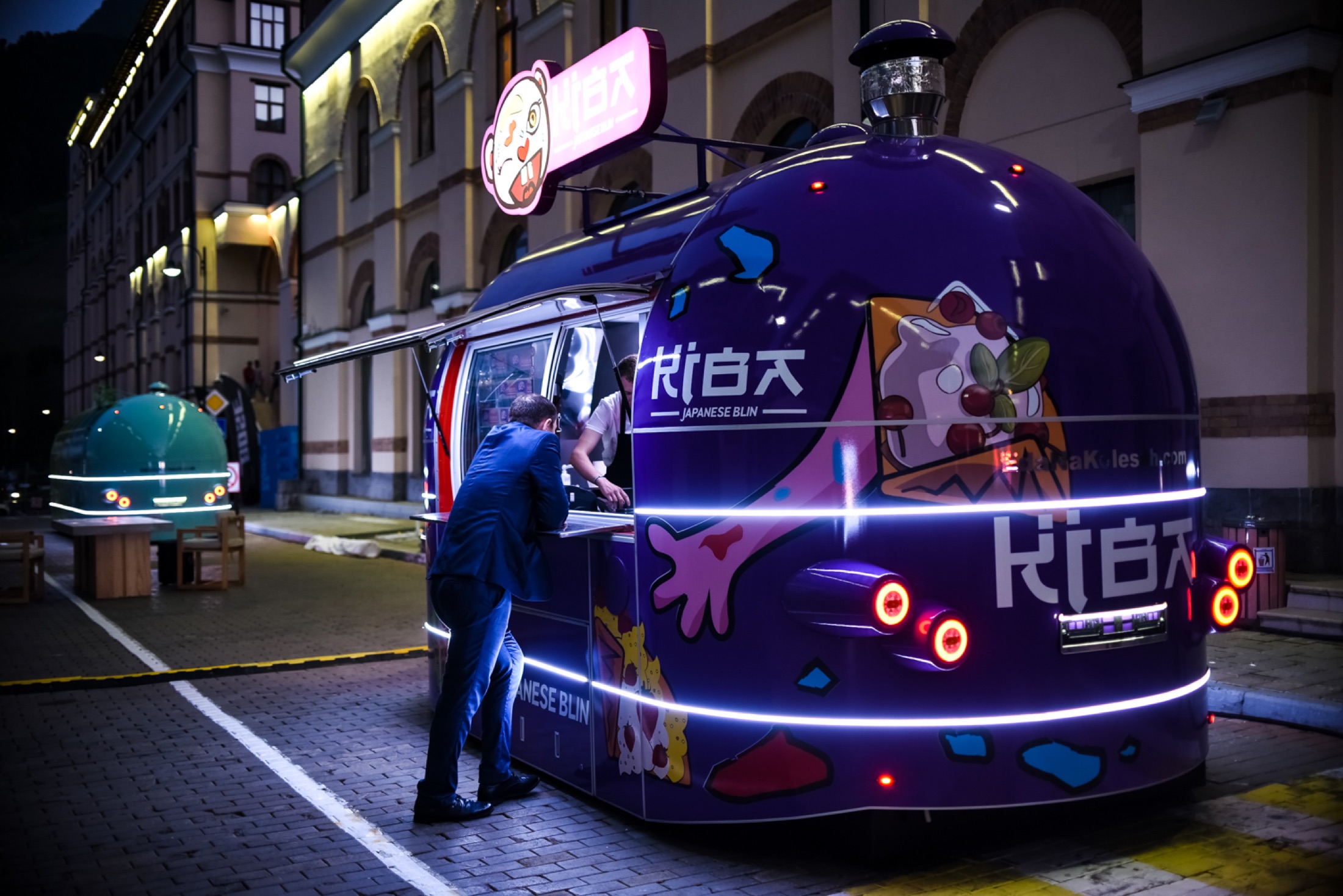
MobiAir brings a rounded, recognizable exterior to customer-facing activations. MobiEdge uses an architectural, glazed form when visual connection between the audience and interior is central. MobiCube provides a straight-wall envelope for equipment-led, office or multi-zone planning. These are starting directions only. The exact model, openings, structure and systems come from the approved project documents.
Review the commercial trailer platform guide with the activation sequence beside it. A brand choice made from one hero image can overlook loading, staff circulation or venue access.
10Prototype the stop, not just the display
Before acceptance, run a dry stop with representative stock, cases, devices, furniture and staff. Begin in travel state. Time placement and setup under the agreed test conditions. Operate the customer sequence, reset between visitors, restock, respond to a simulated system interruption, close, pack and complete the release check.
Record the result against the approved scope and acceptance plan. If the exercise uncovers a new campaign request, process it as a change. If a contracted function cannot be performed, record the open item and its owner.
For a multi-unit program, keep the first approved trailer as a controlled baseline. Record drawing revisions, approved alternates, device images or configurations, packing maps, checklists and field changes. A fleet only repeats reliably when the team controls what it is repeating.
11Questions event-trailer buyers ask
What should I send a mobile event trailer manufacturer first?
Send the activation sequence, tentative tour, site examples, audience and staff counts, equipment and inventory lists, AV cues, access concept, setup target, delivery level and responsible final builder. Label estimates as estimates.
Can one trailer work for different venues?
It can be designed around a range of planned stops, but every location still needs a site review. Venue access, services, operating rules, required documents and authority decisions may differ. Define which elements adapt and which remain fixed.
How quickly can an event trailer be set up?
There is no reliable generic answer. Setup time depends on placement, crew, exterior components, services, AV, furniture, inventory and venue controls. Write the target into the brief, test the agreed configuration and keep the result tied to those conditions.
Does the trailer arrive with event permits?
There is no single federal event-trailer approval that replaces venue and local review. The scope should assign document preparation and coordination, while the venue and applicable authorities retain their own decisions.
Can our agency use its preferred fabricator or AV integrator?
Yes, if the parties define interfaces, information deadlines, site work, testing, document transfer and warranty boundaries. A named integrator should receive approved drawings and provide final equipment data before the affected work is closed.
Can I buy a rolling shell and finish it outside Florida?
Yes. Under the owner-reported U.S. route, Concession Nation can prepare the documented rolling shell for handoff to another qualified builder. This path remains document-pending, and the current unit label, VIN record and MCO or title package control the manufacturer and issuer identities. The receiving builder's contract must cover its completion work, inspections, records and warranty.
12Next step
Send the campaign deck together with an operating brief through Request a Quote. Include the stop list, setup sequence, audience journey, staff plan, packed inventory, technical schedule, access approach and preferred handoff stage. MOBITRUCK can then discuss a shell platform while the assigned completion team scopes the work that makes the tour operable.
Sources checked
Official planning references
- MOBITRUCK, Event and promotional trailers, MobiAir Brand Ambassador project and Manufacturing and U.S. completion path, checked 2026-09-18 for application, project reference and current stage descriptions.
- U.S. Department of Justice, 2010 ADA Standards for Accessible Design and Title III regulations, checked 2026-09-18 for temporary-facility, mobile-unit and nondiscrimination context. Coverage and applicable physical provisions require project-specific review.
- Federal Motor Carrier Safety Administration, Cargo Securement Rules, checked 2026-09-18 for the rule's cargo and interstate-commercial-motor-vehicle scope.
- Electronic Code of Federal Regulations, 49 CFR 390.3, General applicability and 49 CFR 390.5, Definitions, checked 2026-09-18 for FMCSA scope and commercial-motor-vehicle definitions.
- National Highway Traffic Safety Administration, Importation and Certification FAQs, checked 2026-09-18 for manufacturer, VIN, certification-label and state title/registration boundaries.
- Electronic Code of Federal Regulations, 49 CFR Part 567, Certification and 49 CFR Part 568, Vehicles Manufactured in Two or More Stages, checked 2026-09-18 for manufacturer-stage and certification context.
 Business format
 Food-service event planning