
Branded food trailer design guide · Source review September 6, 2026
A customer sees the trailer in stages. From across the site, the shape and main identity have to earn the walk over. At the counter, order and pickup need to be obvious. After service, the same exterior must close cleanly for travel while leaving the builder and service crew access to the systems they maintain. A bigger logo cannot fix a customer side that makes people guess where to stand.
The market does not need another cargo box rescued by expensive vinyl. Shape, openings, light and the way the trailer opens for service should tell one story before anyone reaches the menu.
01Run the seven-second storefront test
Stand at the distance where a customer first sees the unit. Give a person who does not know the project seven seconds, then ask:
- What does this business sell?
- Where would you order?
- Where would you wait or pick up?
- Is the unit open?
- Which name or shape do you remember?
Do the test with the service side open, then with the unit closed. Repeat it in daylight and in the evening conditions you expect. Treat the result as a quick visual-confusion check; it cannot forecast sales.
02Design four distances
| Distance | Customer question | Exterior job |
|---|---|---|
| Across the site | What is that, and is it worth walking toward? | Silhouette, major color, light and one clear identity |
| At the queue | What can I buy and where do I begin? | Menu hierarchy, order point and line direction |
| At the counter | What happens next? | Payment, handoff, condiments and staff communication |
| After the visit | What name or object can I recall? | Distinctive form, concise naming and repeatable brand details |
Trying to solve every distance with one oversized paragraph produces noise. Use the first row to keep silhouette decisions separate from counter details.
03Show the brand in open and closed states
A trailer can look polished during service and unfinished the moment panels close. Prepare elevations for both conditions.
Open state: Check that awnings, windows and menu boards do not cover the primary mark, create an accidental blank area or make order and pickup look identical.
Closed state: Check the travel silhouette, locked panels, required labels and lights, removable objects and how the unit reads in storage or arrival photos. The closed trailer may appear in more behind-the-scenes and transport content than the marketing team expects.
04Give order and pickup different visual jobs
The customer interface should match the service sequence. If orders begin at one opening and finished food leaves another, the exterior can make that division obvious through wording, lighting, counter treatment or placement.
If one window performs both jobs, show where the next customer stands while the current order is handed off. The interior team must review the same decision because counter position affects staff movement, equipment and storage.
Trace one real order with the Food Trailer Project Brief before the marketing team approves artwork. The next article in this series turns that exercise into a complete product, people and dirty-return map.
05Protect the builder's access
Exterior design cannot cover every useful surface. Final builders and service technicians may need defined access to equipment, utilities, ventilation components, shore-power connections, fill or drain points, panels, labels and fasteners.
Create an elevation with three overlays:
- Permanent brand zones.
- Service and regulatory zones that must remain accessible or readable.
- Campaign zones that can change without rebuilding the shell.
That map lets the brand evolve without placing a seasonal graphic over a panel somebody must open every week.
06Build recognition into the object
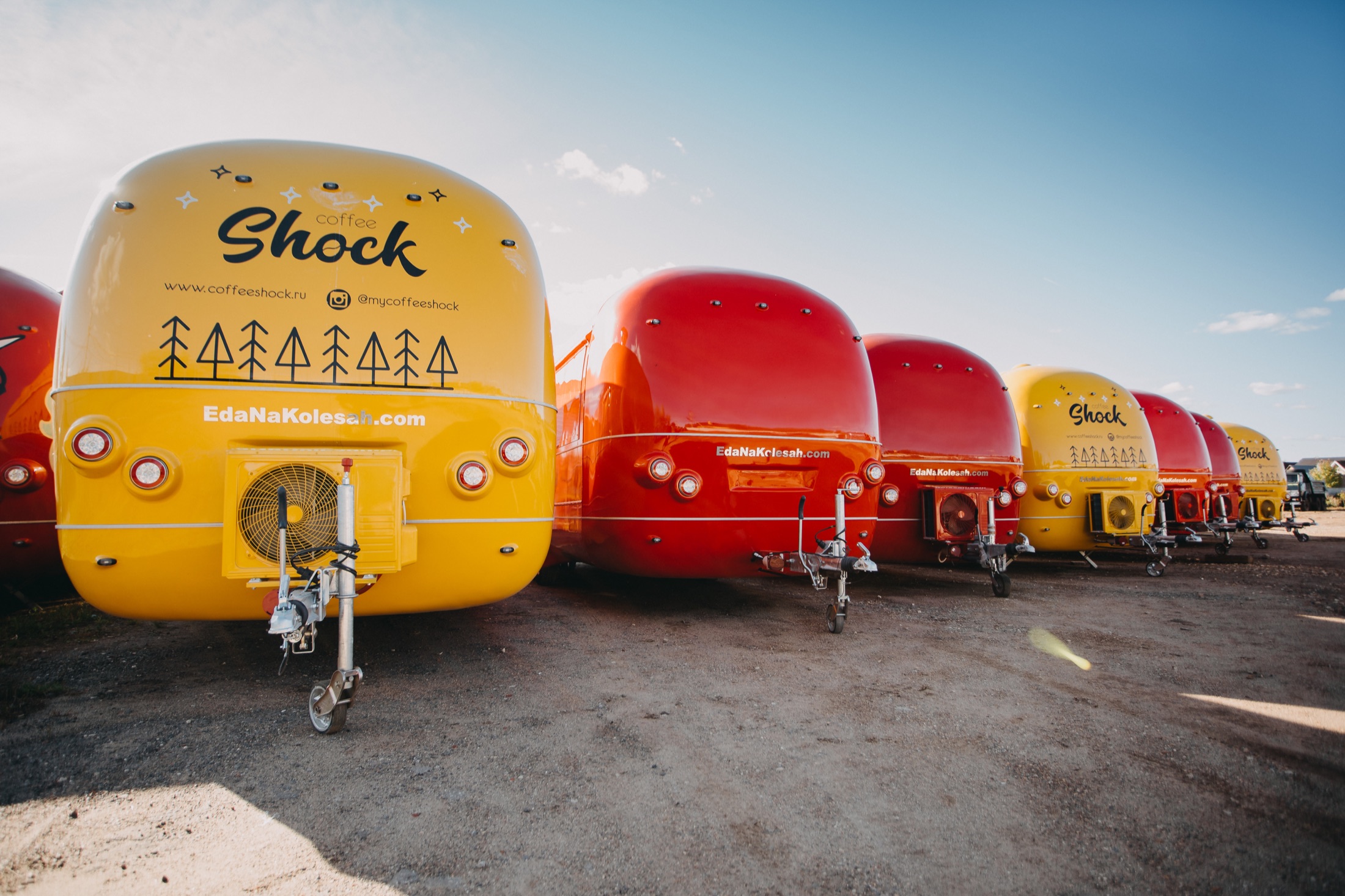
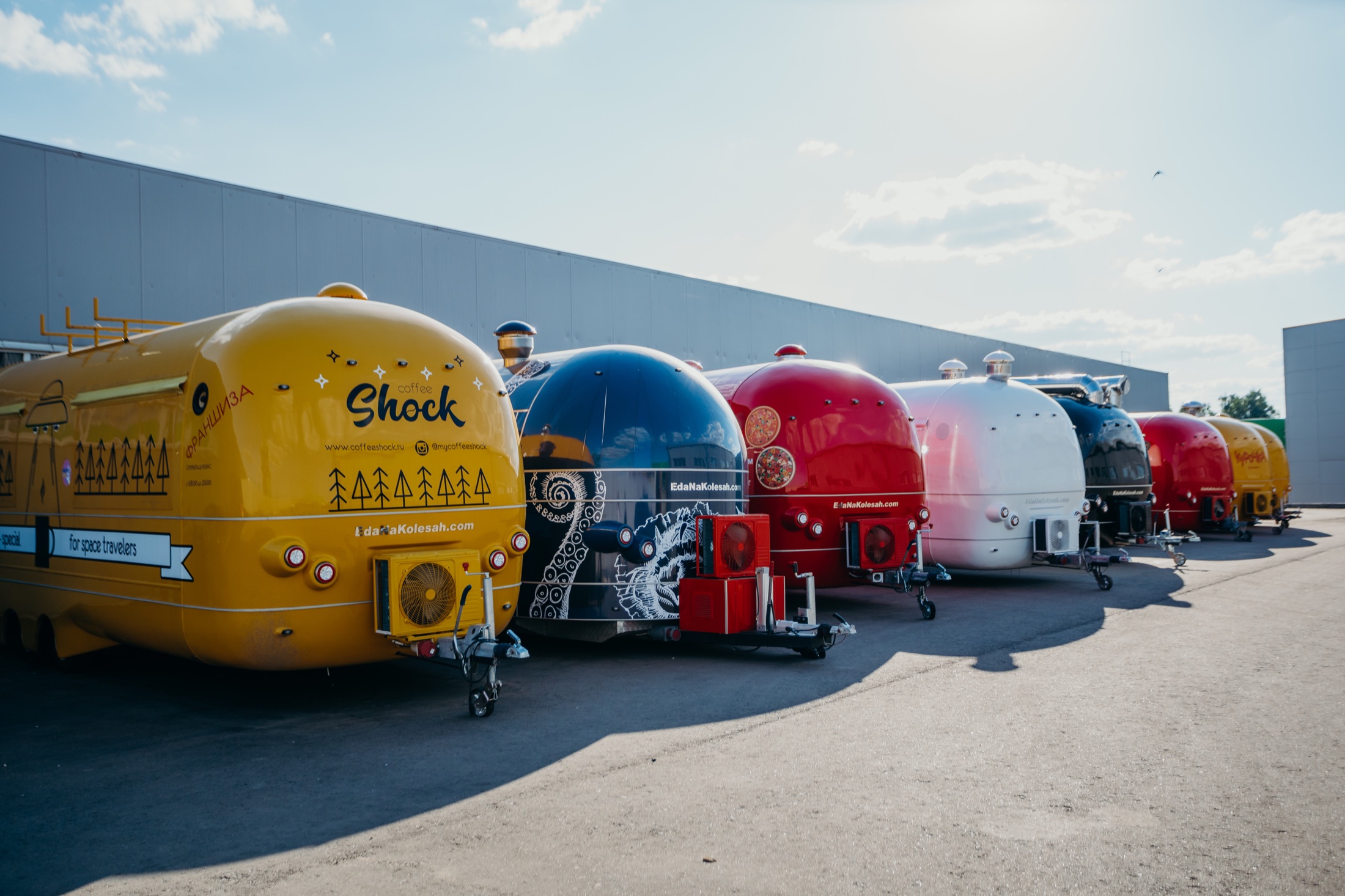
Applied graphics are flexible. Shell form is durable. When proportions, corners, roofline, opening geometry and lighting are intentional, the trailer can remain recognizable through a rebrand, sponsorship or campaign change.
MOBITRUCK manufactures and prepares the shaped shell system at its production facility in Estonia. For the current American path, Concession Nation assembles the U.S. rolling shell, assigns the American VIN and performs the applicable vehicle-certification work for its stage. Concession Nation or another qualified U.S. builder completes the interior and technical systems under a separate scope.
That sequence matters to the storefront: permanent shell features need early approval, while equipment, local completion and removable communication need clear handoffs. Read Food Trailer Design Starts Before the Graphics for the five design layers.
07Make a repeatable brand kit for fleets
A fleet brand system needs rules that survive the first photogenic unit. A restaurant group should document:
- Approved shell model and base exterior finish.
- Primary and secondary identity zones.
- Order, pickup and menu naming rules.
- Day and night lighting intent.
- Sponsor or campaign zones.
- Permitted graphic materials and removal assumptions.
- Photography angles and minimum image set.
- Revision owner and approval process.
- Differences allowed by menu, location or jurisdiction.
Freeze the rules after the first unit is tested in real service. If customers repeatedly enter the wrong side or staff hides the pickup sign with a menu board, correct the baseline before ordering copies.
Sources checked
Current planning and completion-path references
- MOBITRUCK — Concession Nation U.S. completion pathChecked September 6, 2026.
- U.S. Food and Drug Administration — Food Establishment Plan Review GuideChecked September 6, 2026 for menu, flow and equipment inputs that can affect the service interface.
FAQQuestions brand teams usually ask
Will a more attractive trailer outperform a conventional one?
Appearance can improve recognition and strengthen the brand experience, but no exterior alone guarantees traffic or revenue. Measure site traffic, engagement, service times, inquiries and repeat use instead of inventing an uplift.
Should every surface carry a message?
No. Visual hierarchy needs quiet space. Reserve required labels, access points and functional areas first; then assign each remaining message to a viewing distance.
Can the final builder change window locations?
Only through the project's approved change process. Openings may affect shell structure, service flow, equipment, weather protection, appearance and authority review. Do not treat them as a late graphics decision.
What should be permanent?
Keep the features that define the product and rarely change in the shell or durable exterior package. Keep prices, seasonal offers, event information and short campaigns replaceable.
 Planning guide
 Repeatable format
