
Food trailer design guide · Source review September 3, 2026
A logo pasted onto a rectangle is too late to be the first design decision. Set the shell shape, customer side, openings, staff movement, equipment interfaces, road configuration and final builder's scope first. Graphics can finish a trailer that already works and is recognizable without a wrap.
A memorable exterior can stop a customer. The order and pickup experience decides what happens next. Neither appearance nor workflow gets a free pass from clear drawings and buildable interfaces.
01Start with the view customers will actually see
Do not begin with a flat logo file. Begin with the moment somebody walks toward the trailer.
- Which side faces the customer at the intended site?
- Can a first-time visitor find order and pickup without instruction?
- What does the unit look like with awnings and service panels closed for transport?
- Where will a queue form without blocking doors, neighboring vendors or site circulation?
- Are menu boards, lighting and payment visible at the distance where a decision is made?
- Does the exterior still belong to the brand when every removable sign is gone?
Those questions force design into the real world. A beautiful rendering from the wrong angle is still the wrong design.
02Separate the five design layers
| Layer | Decision | Evidence before approval |
|---|---|---|
| Shell architecture | Overall form, roofline, corners and exterior volumes | Dimensioned shell drawings and model selection |
| Operational openings | Service windows, doors, hatches and access panels | Customer flow plus equipment and service-access review |
| Built-in brand features | Lighting zones, dimensional marks and permanent exterior details | Elevations showing open and travel conditions |
| Applied identity | Color, graphics, menu communication and temporary campaigns | Scaled artwork on approved elevations |
| Final build | Interior, equipment, utilities and local completion work | Named builder, interface package and written scope |
If one company supplies the shell and another completes the unit, the layers become a responsibility map. Use the shell-versus-turnkey comparison before assuming that "custom design" includes the kitchen, vehicle stage, graphics and every local approval.
03Let shape carry part of the brand
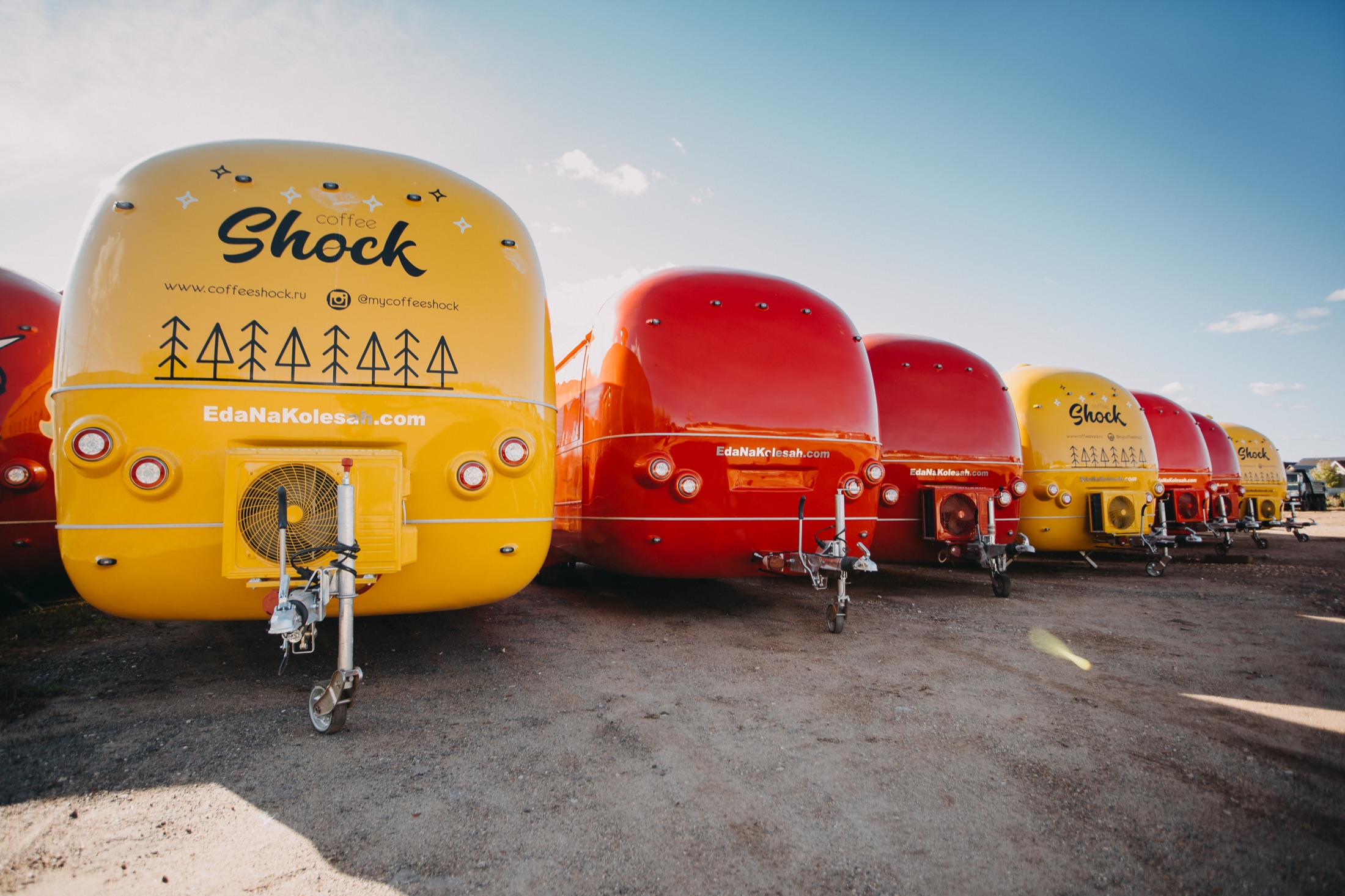
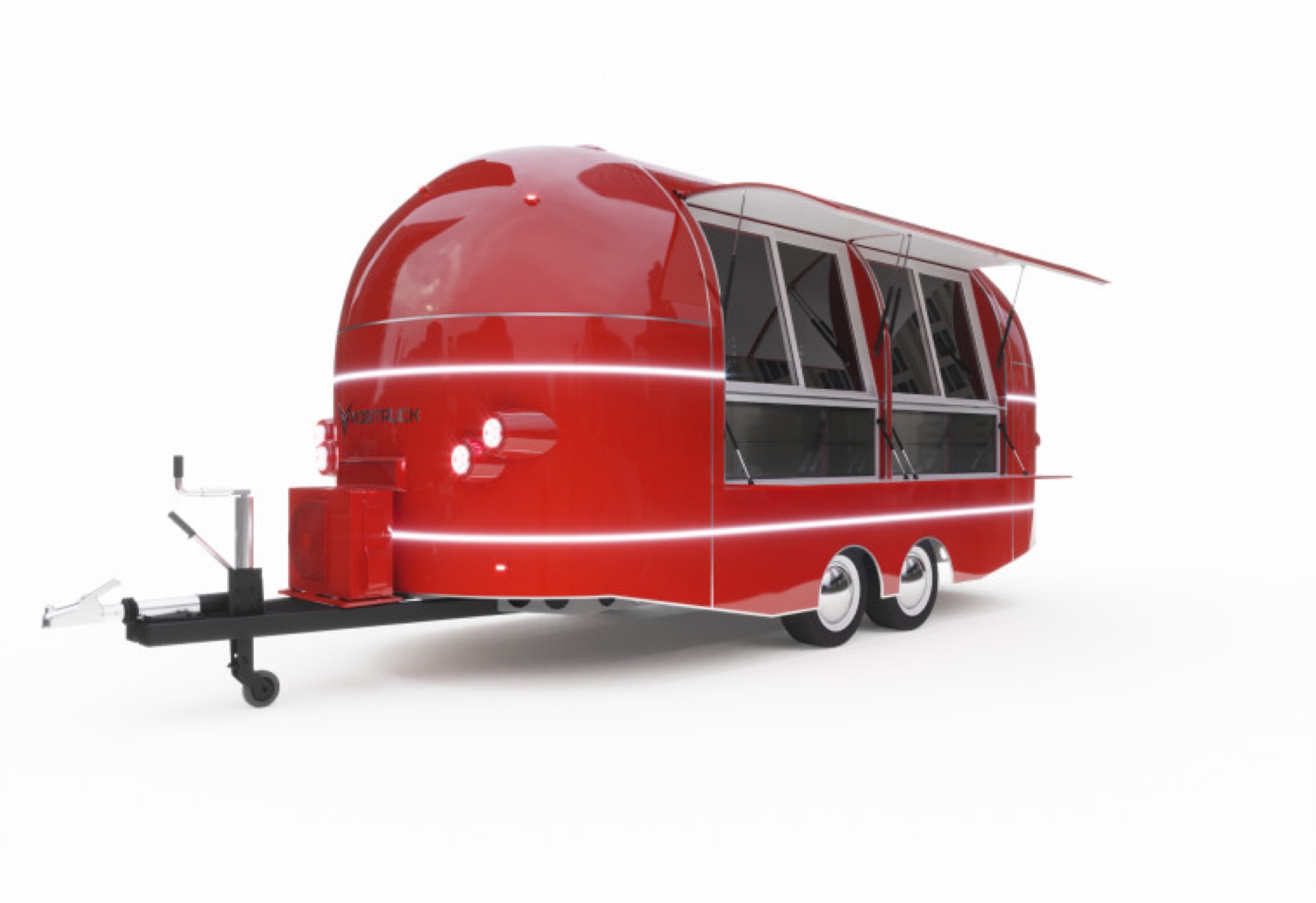
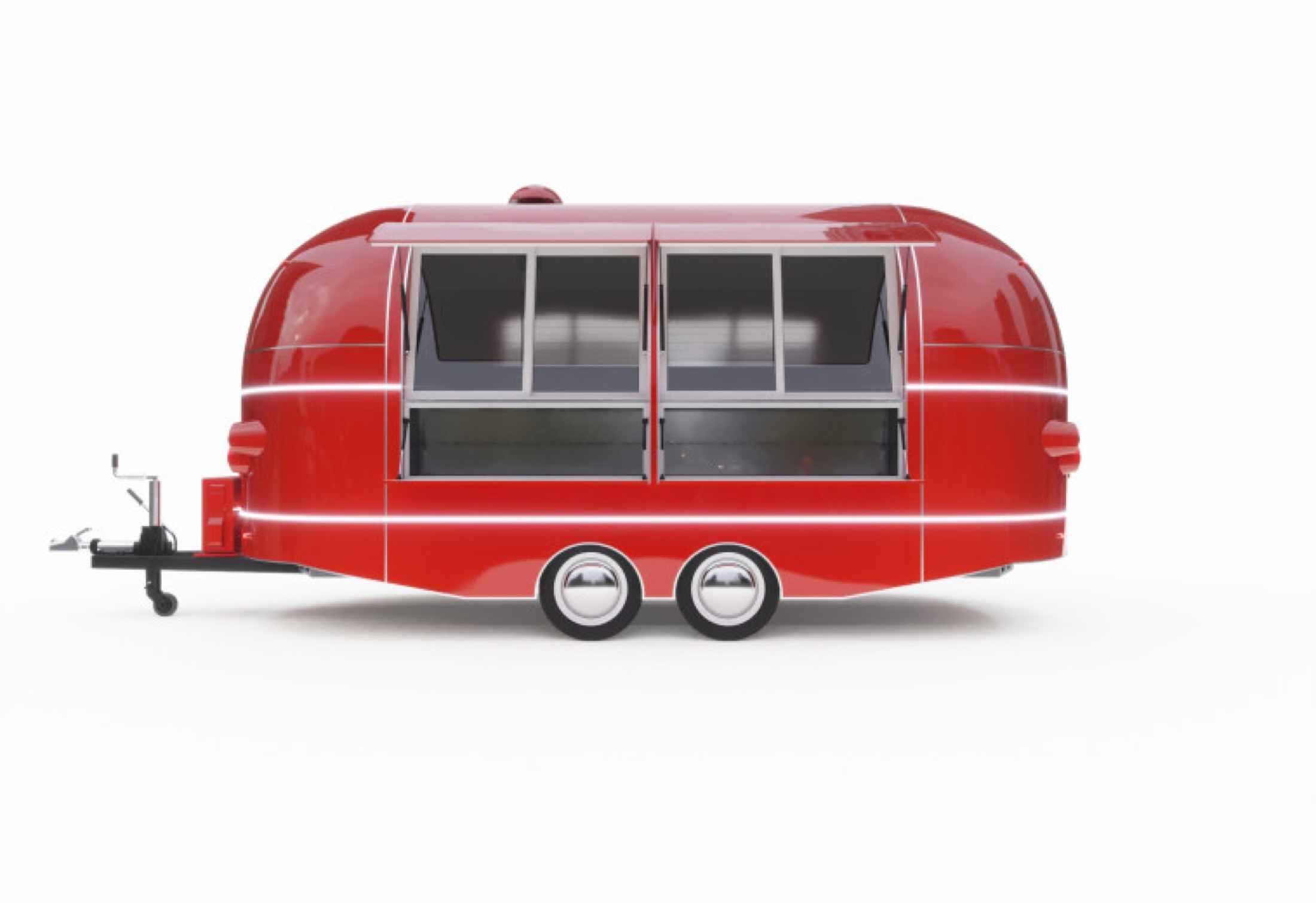
A rectangular trailer often asks the wrap to do all the brand work. A shaped shell gives the brand another tool: its silhouette, window geometry, proportions and light can remain recognizable when the campaign changes.
Decorative complexity has to earn its place. Check every feature against manufacturing consistency, travel and service, U.S. builder interfaces and the customer's ability to understand or remember the unit.
MOBITRUCK develops and prepares the shell system at its production facility in Estonia. Under the current U.S. path, Concession Nation assembles the rolling shell, assigns the American VIN and performs the applicable vehicle-certification work for its stage. Concession Nation or another qualified U.S. builder completes the separately contracted interior. Name those handoffs before approving appearance.
04Draw the trailer in two states
Service state: Show windows and awnings open, counters deployed, menu and payment positions visible and customer clearance marked.
Travel state: Show every panel secured, projections closed, lights and removable signs accounted for and access points protected.
Add a site plan when the trailer will work in a tight location. Include the trailer, tow vehicle when applicable, doors, queue, utilities, waste handling and emergency access. Moving a line on a drawing is easier than moving a service window on a finished shell.
05Put the operating facts into the brief
Exterior decisions must account for the menu process, major equipment cut sheets, staffing, operating jurisdictions, power expectations, water and wastewater, order and pickup flow, the builder split and transport constraints.
Use the Food Trailer Project Brief to keep those facts together. Resolve conflicts between an opening, curve or exterior feature and equipment, ventilation, service access or an authority requirement before production.
06Run the design review like a working session
Start with the operator. What should a customer notice from across the lot? Which piece of equipment controls the line, and what slows the crew now? Ask for the awkward details too: parts of the current experience that feel cheap, loud, confusing or forgettable.
The builder needs fixed dimensions, trade access and enough information to price the work. Put likely rework on the table while an exterior decision can still move. Then have the brand team separate permanent elements from next season's campaign and decide whether the trailer should connect to a restaurant, a product line or a standalone concept.
Write the answers into the brief. "Make it pop" gives the builder nothing to measure.
Sources checked
Current planning and vehicle-stage references
- MOBITRUCK — Manufacturing and U.S. completion pathChecked September 3, 2026.
- Concession Nation — About UsChecked September 3, 2026 for its current food-truck and concession-trailer builder role.
- U.S. Food and Drug Administration — Food Establishment Plan Review GuideChecked September 3, 2026. Local adoption and decisions vary.
- NHTSA — VIN guidance for vehicles manufactured in more than one stageChecked September 3, 2026 for the general link between VIN assignment and manufacturer certification responsibilities. It does not verify the commercial arrangement.
FAQQuestions buyers usually ask
Does a distinctive shell guarantee more sales?
No. Appearance can help a unit attract attention and express a brand, but traffic, location, offer, service, price and operations still matter. Do not build a revenue forecast from an exterior rendering.
Should graphics be designed before the shell?
Brand direction can start early. Final artwork should use the approved shell elevations, real openings, panel breaks, lighting and travel condition.
Can my own builder complete a MOBITRUCK design?
Yes, after the current U.S. rolling-shell stage, provided the receiving company is qualified and the handoff package, interfaces, inspection responsibilities and warranty boundaries are agreed in writing. Read Can My Builder Complete a MOBITRUCK Shell?.
Is the most unusual shape always the best choice?
No. The right shell makes the concept more recognizable without sacrificing the required operation, transport, service or completion path.
 Resource center
 Product system
 Next step