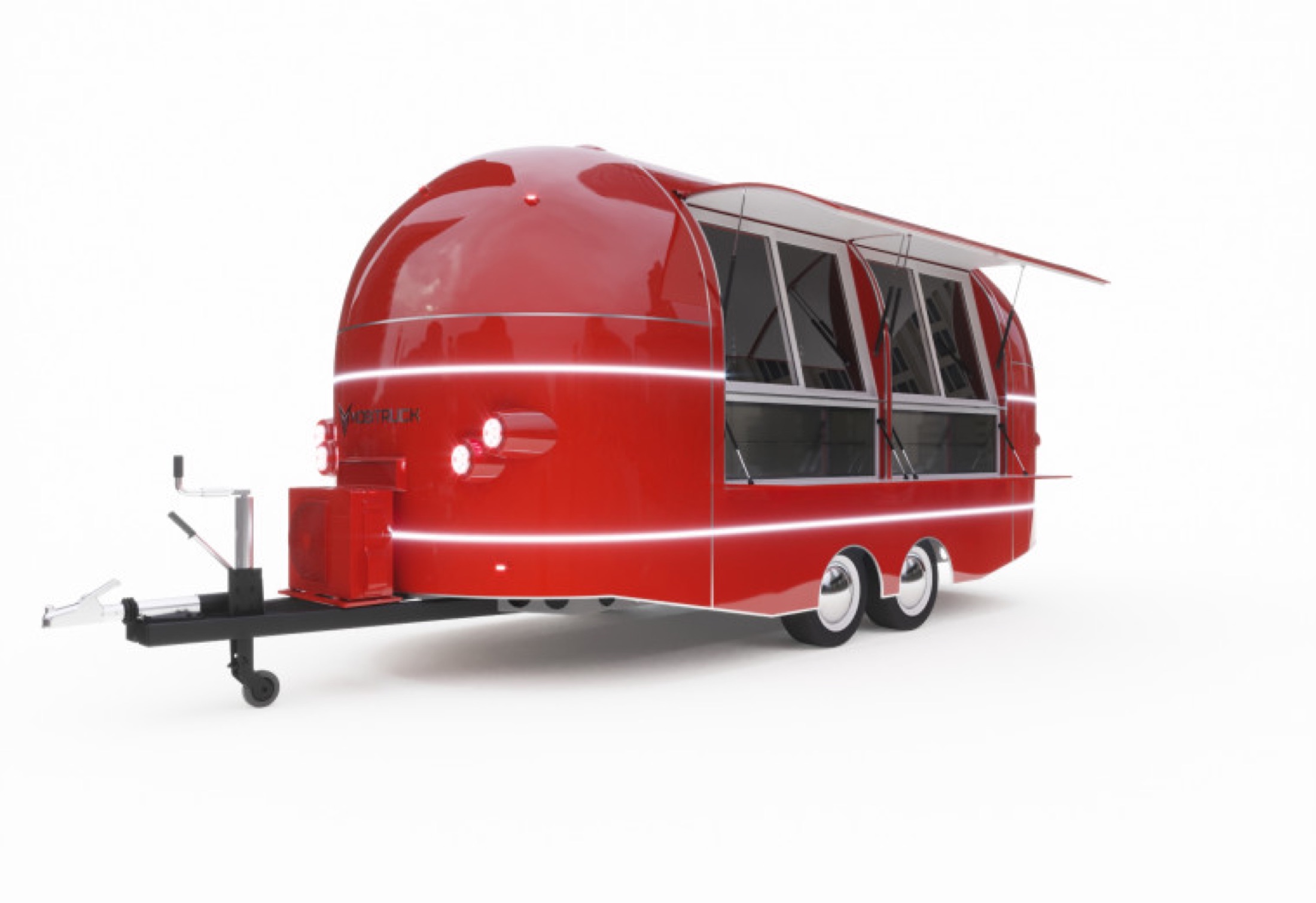
Build the coffee trailer equipment list only after you lock the menu and busiest service period. Record each candidate appliance by manufacturer and model, then coordinate its capacity, dimensions, operating weight, power, water, drainage, heat and service access. The red MobiAir in Deerfield Beach gives the planning team a physical shell and interior to measure. Its photos do not establish a final menu, equipment package or approval status.
This worksheet turns a coffee-and-dessert idea into information a food regulator, equipment dealer and builder can review. The authority responsible for the project decides the applicable requirements.
01Use the red MobiAir as a measured case
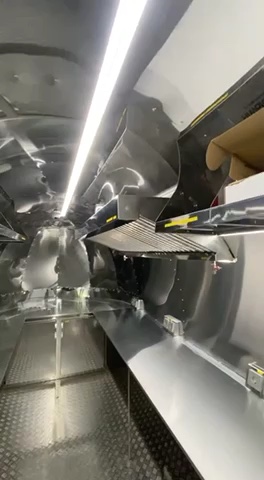
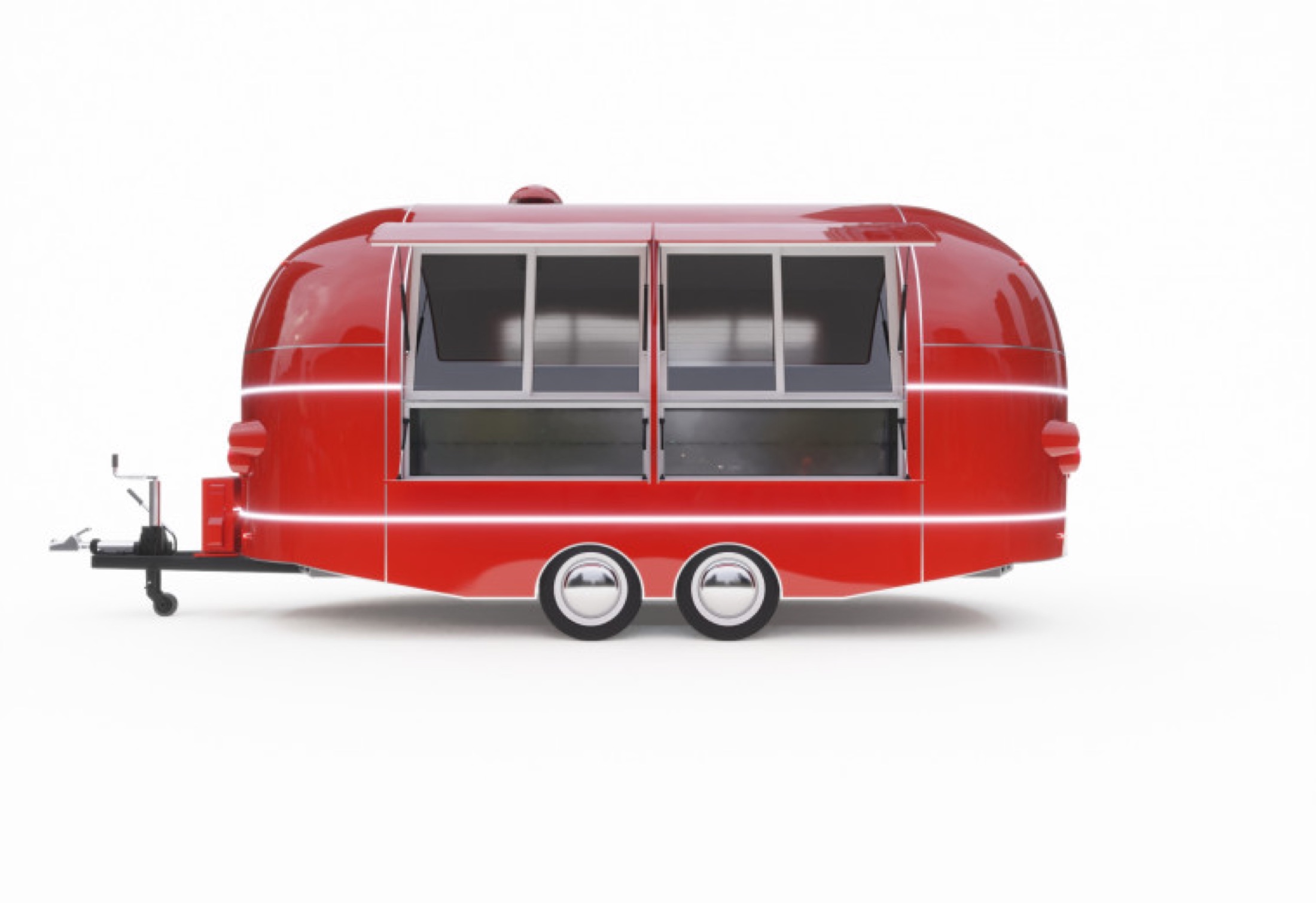
Owner-supplied photos and video show the current red MobiAir's rounded exterior, service openings, stainless work surfaces, shelving, interior lighting and labeled electrical distribution. The unit is available as a physical planning reference at the owner-confirmed Deerfield Beach viewing and final-build location, subject to appointment and current availability.
The media does not identify every installed appliance or prove a permitted coffee-and-dessert operation. Keep those claims open until the project has a signed equipment schedule, approved plans and the records required by its authorities. The Red MobiAir coffee and dessert case separates visible evidence from planned use.
02Write the menu in production terms
A menu name rarely gives a builder enough information. Iced latte can mean espresso pulled to order, bottled concentrate, purchased ice and several milk options. Each version changes the equipment and work line.
Build a menu process sheet before selecting appliances:
| Menu item or family | Preparation on the unit | Busiest 15-minute target | Hot, cold or ambient path | Equipment candidate | Holding and storage need | Cleaning and waste step |
|---|---|---|---|---|---|---|
| Espresso drinks | ||||||
| Batch coffee or tea | ||||||
| Cold drinks | ||||||
| Pastries or packaged desserts | ||||||
| Plated, refrigerated or frozen desserts | ||||||
| Any heated or finished-to-order item |
Use the volume you expect to sell during the busiest period rather than a daily average. The 2026 FDA Food Code's plan-submission model asks for the intended menu and anticipated volume of food stored, prepared and served. It also calls for proposed equipment types, manufacturers, model numbers, locations, dimensions, performance capacities and installation specifications. The Food Code is a model used by jurisdictions; your regulator's adopted rules control the project.
03Follow one rush ticket through the trailer
Draw the work in the order staff will perform it:
- Take the order and payment.
- Select the cup, package or plate.
- Grind, extract, brew, blend or dispense as the menu requires.
- Add milk, ice, toppings or dessert finishing.
- Close the package and move it to customer pickup.
- Return tools for rinsing, washing or sanitizing.
- Restock cups, ingredients and ice without crossing the active production line.
Mark every place where two workers need the same sink, refrigerator, grinder, ice bin or counter. Then mark the path for trash, wastewater and dirty utensils. A floor plan can fit every appliance and still force staff to cross each other during the rush.
The service-flow worksheet helps turn those movements into a measured drawing.
04Give every equipment candidate a record
Category labels such as espresso machine, refrigerator and display case leave the main design inputs unknown. Use the current manufacturer cut sheet for the exact model under consideration.
| ID | Make and model | Menu task | W x D x H | Operating weight | Electrical data | Water and drain | Heat, exhaust or fire data | Service clearance | Cut sheet date |
|---|---|---|---|---|---|---|---|---|---|
| C-01 | |||||||||
| C-02 | |||||||||
| D-01 |
Record alternates on separate rows. Two espresso machines with similar sales descriptions can differ in power, water treatment, drain arrangement, recovery, clearance and loaded weight. The floor plan should point to an approved schedule revision, not an equipment name copied from a text message.
05Size production equipment to the rush
Match the espresso machine, grinders, brewer, blenders, refrigeration, frozen storage and display equipment to the menu process and planned service load. Ask the equipment dealer for rated output, recovery assumptions and operating limits. Test those claims against the drink sizes, recipes and staffing plan.
The 2026 FDA Food Code model says cooling, heating and holding equipment must be sufficient in number and capacity to maintain the required food temperatures. Its mobile food establishment matrix ties plan review to the menu, operation and adequacy of onboard or supporting facilities. A pastry sold in sealed packaging creates a different review from a dessert assembled on the trailer with refrigerated ingredients.
Keep spare capacity as an explicit design decision. Do not turn an unsupported guess into a published number or equipment promise.
06Build the electrical schedule from nameplates
Collect voltage, phase, frequency, amperage or wattage, plug and receptacle information, dedicated-circuit instructions and startup demand when the manufacturer provides it. Include every load used during service: beverage equipment, refrigeration, ice, water heating, pumps, HVAC, ventilation controls, lighting, signs, point of sale and exterior service equipment.
Record which loads can operate at the same time during the busiest period. Give that schedule to the qualified electrical designer or trade responsible for the project. Adding catalog wattages does not by itself establish service size, generator size or battery capacity. The design must account for the selected equipment, startup behavior, continuous loads, operating plan and adopted electrical requirements.
If quiet battery-supported operation is a project goal, state the required operating window and loads. The final system still needs an engineered equipment and charging plan. A marketing preference for silent service is not an electrical calculation.
Use the food trailer power plan before selecting an onboard or external power source.
07Calculate water around peak work
List every water use tied to the menu and cleaning plan: espresso or brewing equipment, handwashing, warewashing, utensil rinsing, food preparation, ice equipment when connected, cleaning and any required service sink arrangement. Record hot and cold connections, treatment requirements, drain type, flow data and service access from the manufacturer documents.
The 2026 FDA Food Code model states that water and hot-water systems must have enough capacity for peak demand. That makes the rush plan relevant to plumbing. A tank sized around an average hour can run short while drinks are being made and utensils are being washed.
The responsible designer must also account for the filled weight of freshwater, wastewater and product carried on the unit. Confirm tank and servicing requirements with the regulator reviewing the mobile operation. Florida's DBPR guide also ties the plan-review package to the unit's water and wastewater arrangement or commissary relationship.
08Reserve the right space for cleaning and food safety
Locate handwashing where staff can use it during production. Show how dirty utensils move to warewashing and how cleaned items drain, dry and return to storage. Separate food, chemicals, waste and personal items in the proposed storage plan.
The 2026 FDA Food Code model addresses handwashing, warewashing, equipment cleanability and food-contact surfaces. It includes a three-compartment sink as the general manual-warewashing rule, with stated exceptions and alternatives. Use the rule adopted by the project's authority before fixing sink count or size.
Refrigerated display, undercounter storage and frozen equipment need access for cleaning and condenser service. A cabinet face that looks finished can block a filter or compressor panel. Draw the service movement before approving fixed millwork.
09Let the menu trigger ventilation and fire review
Coffee and cold desserts may avoid grease-producing cooking, while a waffle iron, crepe plate, fryer or other heated process can change the mechanical and fire discussion. Send the complete menu, process and exact appliance documents to the responsible regulator, mechanical party and fire authority.
Record heat rejection, exhaust information, required clearances, suppression or shutdown instructions and any fuel connection shown by the manufacturer. The equipment dealer's category description is not a project fire review.
10Rehearse the busiest period before release
Use tape, boxes or temporary carts to mark the selected equipment inside the measured shell. Run the number and mix of tickets planned for the busiest 15 minutes. Use the intended staff count and actual cup, pitcher, plate and package sizes.
During the rehearsal, record:
- the longest order queue and where it forms;
- shared equipment that stops one worker while another uses it;
- trips to refrigerated, dry and frozen storage;
- milk, ice, cup and topping restock points;
- dirty-tool return and wash movement;
- trash and wastewater handling;
- customer pickup conflicts;
- doors, drawers or service panels blocked during use.
Update the service map and equipment schedule after the rehearsal. The result is planning evidence, not a promise of sales volume or service speed.
11Release one builder package
The shell team, final builder, equipment dealer and qualified trades should work from the same dated package. Include:
- intended menu and process sheet;
- busiest-period volume assumptions;
- approved equipment schedule and alternates;
- current manufacturer cut sheets and installation instructions;
- coordinated plan, elevations and service-opening locations;
- electrical load and connection information;
- water, wastewater and water-treatment information;
- ventilation, heat and fire inputs when applicable;
- filled and installed weight inputs supplied for vehicle review;
- authority comments, open questions and revision log.
Use the broader equipment and utilities brief for the technical handoff. The signed scope must name who selects, supplies, installs, tests and warrants each item.
12Equipment decisions to resolve
Which espresso machine should I put in a coffee trailer?
Select a candidate only after setting the drink menu, cup sizes, rush target, staffing, power concept, water treatment and service plan. Compare exact manufacturer data and local service support. This article does not endorse a model.
How much electrical service does a coffee trailer need?
The answer comes from the selected equipment and operating sequence. A qualified project professional should size the system using nameplate data, startup and continuous loads, simultaneous use, HVAC and the chosen power source.
Does the red MobiAir already have the equipment shown in this plan?
The owner-supplied media confirms a physical red shell and visible interior elements. The project file must confirm the current installed equipment, condition, ratings and approval status before any item is offered as included.
Can a buyer use a different final builder?
Yes. Give that builder the same dated menu, equipment schedule, cut sheets, drawings and open-authority list. The builder must define its completion, inspection-support and warranty scope in writing.
Will a regulator approve the plan if it follows the FDA Food Code?
The FDA Food Code is a model for adoption by regulatory jurisdictions. The authority responsible for the project applies its adopted law and decides whether the submitted plan and completed unit meet its requirements.
13Bring the menu and two controlling cut sheets
Bring the menu, busiest 15-minute target, staff count and cut sheets for the two appliances that control production. Book a measured planning visit through the Deerfield Beach showroom or send the package through Request a Quote. MOBITRUCK can coordinate the shell questions; the selected builder and authorities define the project-specific equipment and approval path.
14Sources checked
- U.S. Food and Drug Administration, Food Establishment Plan Review Guide, checked 2026-09-19. FDA recommends placing equipment on the floor plan and diagramming electrical, mechanical and plumbing systems before costly purchase and construction decisions.
- U.S. Food and Drug Administration, 2026 FDA Food Code, checked 2026-09-19. The article uses Sections 4-301.11, 4-301.12, 5-103.11 and 8-201.12 plus Annex 7's Mobile Food Establishment Matrix as model guidance, subject to jurisdiction adoption.
- U.S. Food and Drug Administration, Summary of Changes in the 2026 FDA Food Code, checked 2026-09-19 for changes affecting plan-review language and current mobile food establishment references.
- Conference for Food Protection, Mobile Food Establishment Guidance Document, 2025 edition checked 2026-09-19 for the current mobile plan-review framework referenced by the 2026 Food Code.
- Florida Department of Business and Professional Regulation, Mobile Food Dispensing Vehicle Guide, checked 2026-09-19 for Florida plan-review, water/wastewater and opening-inspection context.
- MOBITRUCK USA, Red MobiAir coffee and dessert case, owner-supplied media and case record reviewed 2026-09-19.

 Frozen-dessert guide
 Bakery decision
 Next step