Smoothie and açaí worked example · Official-source review October 10, 2026
One blender jar leaves the service line dirty while the next ticket still needs ice, frozen fruit and a clean lid. That overlap is where a compact smoothie trailer either keeps a clear work path or turns into a counter full of wet tools and open containers.
First trace how one smoothie and one açaí bowl move through storage, produce handling, portioning, blending or assembly, handoff and cleanup while the hand sink remains available. The blender count comes later.
Sources were checked on October 10, 2026. The 2026 FDA Food Code is a model for adoption by state and local jurisdictions. The authority reviewing the actual menu and process decides which adopted provisions apply. Product labels, accepted procedures, current equipment instructions and the signed builder scope control the project.
01The worked example: one smoothie and one açaí bowl
This is a labeled planning example, not a recipe or production claim. Assume the busiest useful pair of tickets contains:
- one made-to-order smoothie using frozen fruit, a refrigerated liquid ingredient, food ice and a customer-selected add-in; and
- one açaí bowl using a frozen base, refrigerated or frozen toppings, fresh produce, a dry topping and a single-service bowl.
Replace every assumption with the launch menu and actual package labels before the layout is released. A bottled juice program, fresh-pressed juice, dairy-free smoothie line and prepared açaí base do not create the same receiving, washing, cold-storage or cleaning duties.
Use one sheet for the two tickets:
| Moment in the order | Smoothie ticket | Açaí bowl ticket | Record the project needs |
|---|---|---|---|
| Retrieve | Frozen fruit, refrigerated liquid, ice and add-in | Frozen base, cold toppings, washed produce and dry topping | Product source, package size, storage temperature, opening date rule and refill container |
| Prepare | Portion ingredients and load the blender jar | Temper or portion the base only under the accepted procedure, then prepare toppings | Prep surface, utensil, hand path, exposure time and cold return |
| Finish | Blend, pour, lid and stage | Assemble, garnish, lid and stage | Customer handoff point, allergen communication and payment position |
| Reset | Move the used jar, lid and utensil out of the clean line | Move scoops, spoons and topping tools to their next approved state | Rinse or wash route, clean-tool reserve, sanitizer control and drying location |
| Refill | Bring forward the next cold ingredients and food ice | Refill base, toppings and bowls without crossing dirty tools | Backup storage, refill path, protected holding and waste route |
Mark each transfer on a scaled counter sketch. The two-ticket sheet is the evidence object for this worked example. It forces the operator and final builder to solve a real service overlap instead of arranging equipment by category.
02Follow the smoothie jar all the way back
Start when the empty jar is clean and dry. Retrieve the ingredients in ticket order, then record where each package opens, where the scoop or pump rests and where the worker can read the label without blocking another task. Follow the filled jar to the blender and the finished drink to the service window.
Do not stop the trace at customer handoff. The used jar, lid and utensils have to leave the clean assembly area. Show where product residue is discarded, where any approved pre-rinse occurs, how the pieces reach warewashing and where sanitized parts air-dry. A shortcut rinse beside open ingredients creates a process conflict.
FDA's 2026 model Food Code generally calls for a three-compartment sink for manual washing, rinsing and sanitizing, subject to its stated exceptions and approval by the regulatory authority. The compartments must accommodate the largest equipment and utensils handled manually unless an accepted alternative applies. Put the actual blender jar, lid, tamper, scoop and reusable prep container into the sink-fit review.
If the menu is still changing, keep the blender count provisional. One more blender may require another clean-jar reserve, a larger dirty landing area and a different peak electrical case. The service line has to absorb the equipment's cleanup duty as well as its rated input.
03Let the bowl expose the cold-storage problem
The açaí bowl ticket is useful because it pulls several cold products onto the counter at once. Draw the frozen base, backup base, fruit, other toppings and finished bowl as separate items. Record the manufacturer's storage instructions and the accepted time or temperature control for each one.
Under the 2026 FDA model provision, time/temperature control for safety food held cold is maintained at 41°F or less unless a stated exception or an accepted time-as-public-health-control procedure applies. That number does not classify every smoothie ingredient as TCS food. The actual product, processing, formulation, package, handling step and adopted local rule decide the classification.
The counter rail holds service inventory. The worked example still needs a reserve location, a refill container and a return or disposition rule. Check whether the refill worker crosses the blender operator, opens a door into the aisle or carries open food past the dirty-tool landing area.
Measure cold-storage demand from the package list and replenishment plan. Capture the equipment model, interior arrangement, operating temperature range, ventilation clearance, condensate provisions, defrost behavior, door swing and electrical data. A refrigeration category is not enough for the final load schedule or builder cutout.
04Give food ice its own route
Food ice belongs in the ingredient flow. Record its approved source, receiving or onboard production method, protected storage, scoop, scoop holder, refill route and end-of-service cleaning. Keep hands, cups and nonfood items out of the ice bin.
Cooling ice follows a different record. The FDA model code says that ice used to cool exterior surfaces of food, packaged beverages, coils or equipment may not later be used as food. If the operation uses ice in both roles, give each role a distinct container, tool and route. Color alone should not carry the procedure; label the containers and train the handling step.
This distinction affects tank and equipment planning. An onboard ice maker adds potable-water treatment or quality questions, drainage, heat rejection, cleaning access and electrical load. Purchased food ice shifts those duties toward receiving, protected storage and refill frequency. The operator should choose the method before the builder reserves water, drain and power connections.
05Write a water-duty ledger before choosing tank capacity
The 2026 FDA Food Code model requires drinking water from an approved source. It also requires handwashing facilities placed for convenient use in food preparation, dispensing and warewashing areas. Raw fruits and vegetables intended for ready-to-eat service generally must be thoroughly washed before cutting, combining, serving or offering for consumption, subject to the code's stated provisions.
Those rules create separate water events. Put each event on the ledger instead of starting with a generic tank size:
| Water event | Question for the operator | Drawing or equipment input |
|---|---|---|
| Handwashing | When do workers change from receiving, payment, waste or dirty tools back to food handling? | Hand-sink location, clear access, hot-water delivery and supplies |
| Produce washing | Which fruit arrives whole, which arrives commercially prepared and where is ready-to-eat produce washed under the accepted plan? | Accepted sink or prep arrangement, landing space, drainage and separation from warewashing |
| Warewashing | What is the largest jar, lid, scoop or container, and how many clean sets cover the rush? | Compartment dimensions, drainboards or landing areas, sanitizer control and drying storage |
| Equipment cleaning | Which blender bases, ice components, cold wells and food-contact parts require water or must stay dry? | Manufacturer instructions, service access, splash control and floor or drain coordination |
| Food or beverage process | Does any menu item use water or onboard ice as an ingredient? | Approved supply, filtration only when supported by the equipment and water record, backflow protection and connection details |
| Closing cleanup | Which surfaces, bins and removable parts are cleaned after service? | Water-heater recovery, wastewater volume, chemical storage and waste-disposal route |
Estimate each event from the accepted menu, equipment manuals, cleaning procedure, staff count and operating period. A qualified plumber and the final builder can then coordinate tank capacities, water heater, pump, piping, backflow protection, drains and wastewater handling with the authority's requirements. Do not publish one universal fresh-water or wastewater number for this category.
06Keep labels beside the topping rail
A smoothie or bowl may combine milk, soy, peanuts, tree nuts, sesame or another major allergen depending on the actual products. FDA identifies nine major food allergens for federal labeling purposes. Keep current package labels and formulation updates for the ingredients being used.
The operator needs a written method for ingredient questions and tool control. The trailer layout can support that method with protected label storage, separate or clean utensils as specified by the operation, a reachable hand sink and a dirty-tool route that does not run across open toppings. The layout cannot promise an allergen-free order or replace staff procedures and supplier records.
Map one allergen-sensitive ticket through the worked example. Identify who reads the labels, which ingredients are excluded, what tools and surfaces are used, how the order is marked and where uncertainty stops the sale. The reviewing authority and the operator's food-safety plan control the accepted procedure.
07Test the rush and the closing wash as different load cases
The blender line is only one part of the electrical schedule. Refrigerators, freezers, an ice maker if used, HVAC, water heating, pumps, lighting, point of sale and small equipment may operate together. Nameplate totals alone do not show that sequence.
Build at least two project cases from the selected equipment:
| Operating case | Loads and events to place on the timeline | Decision it supports |
|---|---|---|
| Two-ticket rush | Blenders under the planned operating pattern, refrigeration and freezer cycling, ice production or refill, HVAC, pumps, lighting and point of sale | Simultaneous demand, circuit allocation, heat rejection and worker conflicts |
| Closing wash | Water heating or recovery, pumps, refrigeration, ventilation still required, warewashing and equipment cleaning | Water-heater recovery, wastewater handling and whether closing work exceeds the planned utility source |
Record voltage, phase, frequency, rated current or input, plug or hardwire connection, dedicated-circuit instructions, clearances and service access for every selected model. Manufacturer documents and a qualified electrical designer decide the final system. Carry the two cases into the food trailer power plan before choosing shore power, a generator, batteries or a combined source.
Add equipment, water, wastewater, product, ice, packaging and workers to the food trailer weight budget. Use completed-unit ratings and unit-specific records; a category estimate does not establish available payload.
08Hand the final builder the two-ticket sheet
The builder needs records that connect the menu to each opening and utility. Provide the two-ticket sheet, scaled work-line sketch, ingredient and product labels, cold-storage list, water-duty ledger, clean-tool reserve, cleaning instructions, equipment schedule and the rush and closing load cases. Attach current cut sheets and installation manuals for every selected unit.
Assign responsibility for purchase, installation, trade design, commissioning, authority corrections, operating procedures, maintenance and warranty. If fresh-pressed juice or another process is added later, reopen the water, produce handling, equipment, cleaning and load review rather than treating it as a menu edit.
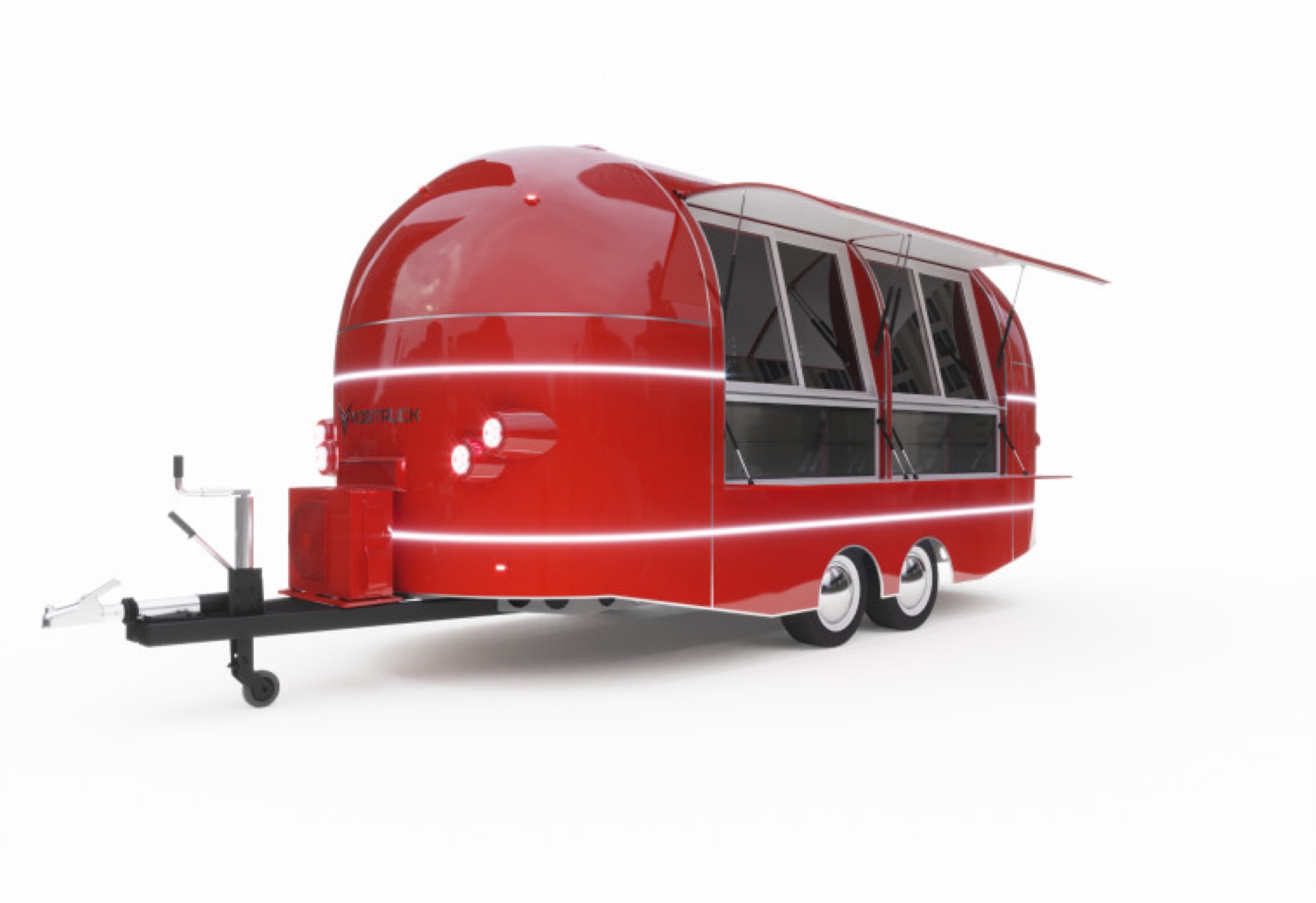
MOBITRUCK prepares the shell system at its manufacturing operation in Estonia. In the current U.S. path, Concession Nation assembles the rolling shell and, within its signed scope, issues the American VIN and MCO and completes applicable vehicle-certification work for that stage. Concession Nation or another qualified U.S. builder may complete the smoothie, juice or açaí application under a separate final-build scope.
Vehicle certification does not approve the menu or food operation. Food, plumbing, electrical, building or site, fire, workplace and business reviews remain separate. The signed scope should identify the authority contact and responsible party for every interface.
09Sources checked October 10, 2026
- FDA Food Code 2026 — current federal model code and jurisdictional-adoption boundary.
- FDA Food Code 2026 PDF — model provisions for produce washing, cold holding, food ice, manual warewashing, potable water and handwashing sinks.
- FDA: What is a major food allergen? — current list of nine major allergens for federal labeling context.
- FDA list of American National Standards for food equipment — recognized sanitation-equipment standards and certification context.
- NHTSA importation and certification FAQs — vehicle-manufacturer, VIN and certification context for trailer stages.
Send MOBITRUCK the launch menu, ingredient labels, first operating market, equipment candidates and completed two-ticket sheet. We can review those inputs against a shell or rolling-shell configuration and document the open questions for the U.S. final builder. Request a configured project review.
 Related beverage planning
 Related frozen-service guide
 Electrical planning