
Georgia food-trailer startup guide · Official-source review September 28, 2026
Short answer: Before buying a food trailer in Georgia, settle three facts: the menu, the proposed base of operation and the first vending address. The county containing the approved base becomes the county of origin. That county reviews the base and issues a separate permit for each mobile unit. Other counties require authorization before you operate there, and each vending site still needs property permission plus the local zoning, fire or event approvals that apply.
Georgia's Department of Public Health tells prospective operators to check local ordinances, find a workable base and contact the county health department before investing. That order matters. A trailer can be road-ready and still fail the food plan, site test or base requirement.
Official pages and forms were checked on September 28, 2026. This is an operating guide, not legal, tax, fire-protection or licensing advice. Your menu, process, fuel, base, parcel and city or county boundary control the actual path.
01Start with the county of origin
Georgia calls the county where the base of operation is located the county of origin. Apply there for the base permit and a separate permit for every mobile food unit. The current DPH application says the unit and base must be under the ownership and active managerial authority of the same permit holder.
That makes the base an early business decision, not an address to fill in after the trailer is built. Ask the county environmental-health office to review these items before you commit:
- the complete menu and where each preparation step occurs;
- the proposed base address and the services available there;
- a sketch of the base and a labeled unit layout;
- the first vending address, operating hours and property authorization;
- fuel, generator, hood, suppression and other fire-review inputs;
- any work planned at another kitchen or storage location.
Keep the county's written response. If the base moves, the menu changes or the permit holder changes, reopen the review rather than assuming the original answer follows the business.
02The base of operation is part of the permitted system
The state rule defines the base as a fixed, permitted location from which the mobile unit operates. Even a unit connected with an existing restaurant needs a separate base-of-operation permit; the restaurant permit does not become the mobile base permit.
DPH's mobile-food FAQ says the unit returns to its base daily for work such as wastewater disposal, filling potable-water tanks, restocking, cleaning and servicing. The same FAQ says separate permit holders cannot simply share space or equipment. The proposed arrangement needs to fit the county's base-permit requirements and the permit holder's managerial control.
Do not sign a kitchen rental because the word "commissary" appears in the advertisement. Give the agreement and physical plan to the county. Ask which sinks, water supply, wastewater connection, storage, food-preparation areas and parking or servicing functions must belong to this operation.
03Test one vending address before approving the layout
A Georgia health permit or added-county authorization does not create permission to use every parking lot. DPH's current forms ask for a property-use agreement, a location listing and a toilet-use agreement. The mobile-food FAQ says the operator needs written property-owner approval and a working restroom within 200 feet. The toilet agreement must cover the operating hours; if the facility is unavailable, the unit must leave the location.
Use the food-trailer location guide to screen the actual parcel. Send the city or county planning office a simple site plan showing the trailer, tow vehicle, customer queue, service-window side, generator or shore-power point, fire access, trash, grease and restroom route. Ask which land-use, business, sign, fire or event rules apply.
An address with "Atlanta" in the mailing line may sit in Fulton or DeKalb County. Verify the parcel and county instead of routing the application from the city name alone.
04Freeze the menu before plan review and construction
The current Georgia mobile-unit application, revised 06/2026, asks what happens on the unit: packaged service, reheating, raw-animal-food cooking, chopping, cooling and other processes. It also asks for sink sizes, pump and water-heater data, fresh- and wastewater capacity, power sources, refrigeration, hot holding, cooking equipment and finish materials.
The required-document section calls for the menu, exterior and interior photographs, a detailed labeled drawing, manufacturer specification sheets, residency verification and proof of other applicable approvals such as zoning and fire. It also asks for the location, property and toilet forms.
Turn that application into the design checklist. A drawing that says "refrigerator" is weak. Record the manufacturer, model, dimensions, electrical or fuel load, clearances, drain and water needs, ventilation relationship and service access. The equipment and utilities brief provides a working format.
The current form states that the wastewater tank must be at least 15% larger than the freshwater tank. That number belongs in the plumbing schedule before the tanks and cabinetry are fixed.
05Plan review and permit timing are minimums, not an opening promise
Georgia Rule 511-6-1 calls for a permit application at least 10 business days before opening and properly prepared plans at least 14 business days before construction of a new establishment or conversion. Those are submission minimums. They do not promise approval within 10 or 14 days.
Start the discussion earlier if the menu includes raw proteins, cooling, reduced-oxygen packaging, a wood-fired appliance or other work that may change food or fire review. Do not schedule the first paid event around a minimum filing interval.
The county's initial inspection addresses the food-service permit. Builder QA, electrical or plumbing inspections, fire-system records, vehicle registration and permission to use a site remain separate evidence. The build and inspection sequence keeps those lanes visible.
06Add every outside county before operating there
An active permit from the county of origin is recognized across Georgia, but the operator still applies for authorization from each outside county before operating there. The current additional-county form asks for the origin-county permit, menu, locations and times, local zoning or fire proof where applicable, plus property and toilet agreements.
Authorization is not the same as a new origin-county permit. The outside county verifies the permit and supporting records, may charge an administrative fee and can conduct periodic unannounced inspections. Local ordinances and the site decision still apply.
The 06/2026 unit application requires notice to the health department at least seven days before a vending-location change. Keep a location register with the address, property contact, toilet agreement, approved hours, county authorization and date submitted. A calendar entry is easier to defend than a text-message chain.
07Choose the Atlanta vending lane that matches the site
The City of Atlanta separates public right-of-way vending, private-property vending and special events. Do not move paperwork from one lane into another.
| Atlanta operating plan | Starting office or program | What to confirm |
|---|---|---|
| Designated public right-of-way location | Street Eats Atlanta | City business license or qualifying home-municipality license, Georgia sales-tax ID, Fulton or DeKalb mobile-food permit, public-vending application, fees, background check and reservation system |
| Private parking lot or other private property | Atlanta Vending Program and APD License and Permit Unit | Property permission, health approval and the parcel-specific zoning or Special Administrative Permit path |
| Special event | Mayor's Office of Special Events, event organizer and the responsible health and fire offices | Event dates, footprint, temporary-food treatment, fire conditions and whether the normal daily-return arrangement continues |
Street Eats currently lists a $75 annual public-vending application fee, a $350 annual electronic-reservation fee, a $50 annual background-check fee and a one-time $20 fingerprint fee. The City page also says these fees are nonrefundable. Check the current invoice and requirements before applying; those figures are not a total startup budget and do not cover the county health work, business license, build or operating site.
Atlanta crosses two counties. A prepared-food operator needs the appropriate Fulton or DeKalb health record before the City vending step. Fulton County's current food-service page sends new facilities through environmental-health review and links the state mobile forms. Its fee schedule still carries an April 1, 2022 effective date, so use it only as an early planning reference and request a current invoice from Fulton.
08Form the business and tax accounts on a separate track
Georgia does not require every operator to choose an LLC. Entity choice is a legal and tax decision. If you form a domestic LLC, the Secretary of State's current guide lists a $110 online filing total and a $60 online annual registration. The first annual registration is due January 1 through April 1 of the year after formation. Verify the fee when filing.
Register the appropriate sales-and-use tax account through Georgia Tax Center. Obtain the city or county business license or occupational tax certificate that applies to the business location and operation. Atlanta has its own occupational-tax process. These records do not replace the food permit, and the food permit does not create the tax accounts.
If you hire staff, add payroll, unemployment-insurance and workers' compensation questions before opening. Insurance should match the actual tow vehicle, trailer, food operation, employees, property agreements and event contracts. A generic certificate copied from another operator is not a coverage analysis.
09Coordinate the MOBITRUCK shell and the Georgia final build
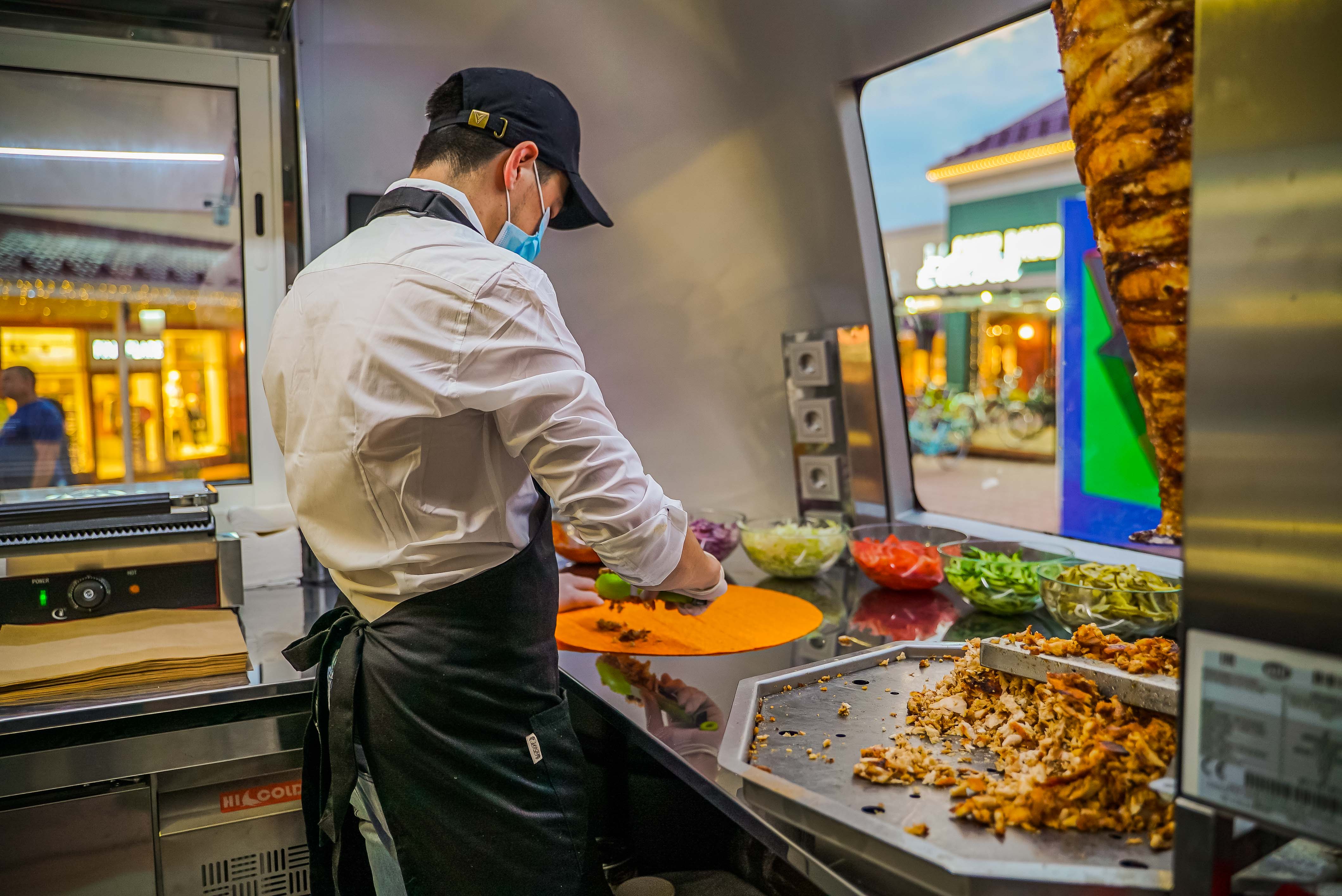
MOBITRUCK manufactures and prepares the shell kit at the production facility in Estonia. Under the current U.S. route, Concession Nation assembles the rolling shell, assigns the American VIN and completes the applicable U.S. vehicle-certification work for its stage with the specified running gear. Concession Nation can complete the commercial upfit, or the documented rolling shell can go to another qualified builder.
The Georgia food and site authorities still decide whether the actual menu, equipment, base and location comply with their rules. The builder needs the county's current requirements before fixing sink sizes, tanks, cooking equipment, ventilation, power or service openings.
If another builder completes the unit, identify the handoff in writing. The proposal should say who supplies the equipment, who performs each trade scope, who coordinates authority comments, which tests and records accompany the unit and who warrants each stage. The shell-versus-builder guide explains that boundary.
10Build the opening file around the physical unit
Keep one digital folder and one delivery checklist tied to the trailer's VIN and physical labels. Include the records that actually exist for the project:
- approved menu, base plan, unit plan and equipment specification sheets;
- origin-county base and mobile-unit permits;
- added-county authorizations and the current location register;
- property and toilet agreements for each recurring site;
- zoning, fire, event, trade and business records that apply;
- VIN, origin or manufacturer record, certification label photographs, axle and brake data, ratings, title and registration records;
- final drawings, equipment manuals, test records, warranties and open-item log.
Do not label a builder checklist as a government inspection. Record the issuer, date, unit identifier and scope for every document. A permit from one county and a test report from a contractor answer different questions.
11A practical first 30-day work plan
During the first week, write the full menu and food flow, identify the proposed base, confirm the parcel jurisdiction and send the concept to the county environmental-health office. Ask planning and fire officials about the first vending site.
Next, build the application package around their responses: layouts, equipment models, tank calculations, power and fuel schedule, property and toilet forms. Form the business and start tax or local-license accounts in parallel, but do not let that paperwork substitute for plan review.
Release construction only after the review path and design inputs are clear enough to control expensive work. Keep authority comments in the project log. Before opening, close the county inspection, site and fire conditions, vehicle file, insurance, tax accounts and employee records that apply to the operation.
12Questions Georgia food-trailer founders ask
Do I need a separate Georgia permit for every food trailer?
The county of origin issues a separate mobile-unit permit for each unit, along with the base-of-operation permit. The current state application says a separate application is required for each mobile unit.
Can I use a shared commercial kitchen as the base?
Do not assume a kitchen rental qualifies. DPH requires the unit and base to be under one permit holder's active managerial control and says separate permit holders may not share equipment and space in the ordinary mobile-food arrangement. Give the proposed contract and layout to the county before signing.
Can I operate anywhere in Georgia after my origin-county permit is issued?
No. Apply for authorization in every outside county before operating there. You also need the location records, property permission, restroom access and local zoning, fire or event approvals that apply.
Does a Georgia health permit approve the trailer's VIN or road use?
No. The food permit addresses food-service operation. VIN, manufacturer or origin records, certification labels, axle and brake ratings, title, registration, insurance and driver requirements belong to the vehicle and road-use file.
Should I buy equipment before county plan review?
Select candidate equipment so the reviewer can see the real loads and food process, but avoid irreversible purchases or final mounting until the county and other responsible authorities have responded to the submitted plan.
13Sources checked September 28, 2026
- Georgia DPH Food Service: current rules, mobile-food FAQ, applications and forms.
- Georgia DPH Mobile Food Service Establishment FAQ: county of origin, base, outside-county authorization, property permission and daily servicing.
- Georgia DPH Permit Application for Mobile Food Unit, rev. 06/2026: unit, process, equipment, water, power and required-document fields.
- Georgia DPH Additional-County Authorization: supporting records and outside-county authorization.
- Georgia Food Service Rules, Chapter 511-6-1: base, permit, plan-review and inspection requirements.
- Fulton County Board of Health Food Service: Fulton review contacts and current state-form links.
- City of Atlanta Vending Program and Street Eats Atlanta: public right-of-way, private-property and event routes.
- Georgia Secretary of State domestic-entity guide and Georgia DOR sales-tax registration: entity and tax-account starting points.
14Next step: bring the permit inputs to the project review
Send [email protected] one menu, the proposed Georgia base address, the first vending address, the target opening date and the preferred build path. MOBITRUCK and the selected U.S. builder can use those facts to define the shell, equipment interfaces, handoff records and questions that still belong to Georgia authorities.
Start the project brief or request a configured price, lead time and video call.
 Authority map
