Fried chicken one-order worked example · Official-source review October 14, 2026
A cooked basket has nowhere safe to land if the only open counter is the breading station. That single conflict is enough to stop a fried-chicken trailer drawing, even when the fryer, hood and sinks all fit.
Start with one order and follow it from raw refrigeration to customer pickup. The useful layout is the one that keeps raw poultry work, finished-food work and used-oil work distinct while staff can still reach the hand sink, temperature-check point and service window. Fryer quantity comes later, after the operator defines the product, batch and hold policy.
Sources were checked on October 14, 2026. FDA Food Code 2026 is a model offered for adoption. The applicable state and local authority, fire official, equipment instructions and approved operating procedures control the actual project.
01Run one order through the drawing
Use this route with the launch menu and exact packaging. It is a layout test, not a production-rate promise or customer result.
| Order step | Physical station | What must be known before release | Drawing fails when |
|---|---|---|---|
| Receive and store | Raw-poultry refrigerator or freezer | Product form, case size, delivery state, thawing method and storage quantity | Raw packages have no protected route or storage assignment |
| Portion and bread | Raw landing, portioning and breading position | Whether product arrives pre-portioned or is cut on board; breading system; pans, racks, tools and discard procedure | The work shares a ready-to-eat counter or blocks handwashing |
| Load and fry | Fryer battery under the designed ventilation and fire-protection system | Exact fryer models, basket load, product instructions, oil type, recovery test and utility data | Capacity is guessed from fryer width or nominal oil volume |
| Verify and release | Drain and temperature-verification point | Target required by the adopted rule and product procedure; instrument; sample method; failed-batch disposition | Cooked food moves directly to holding without a defined release check |
| Hold or assemble | Hot holding, finishing and ready-to-eat assembly | Maximum planned hold, batch identification, sauce and garnish positions, packaging and allergen procedure | Cooked chicken returns toward raw breading or waits on an unassigned shelf |
| Pick up | Protected order landing and service window | Ticket method, bag or box dimensions, side items, condiments and customer handoff | Pickup traffic crosses the fryer landing or dirty-return path |
| Close and clean | Cool-down, oil service, warewashing and waste route | Oil filtration or replacement procedure, approved oil container, largest washable part and waste destination | Hot oil must cross the aisle or occupy a sink or food counter |
Put arrows on a scaled plan. Then walk the route with a fryer basket, breading pan, finished-food tray, thermometer, package and oil-service container. If two arrows cross, name the time separation or move the station. "Staff will work around it" is not a release condition.
02Decide what reaches the trailer
The largest design fork occurs before the fryer: whole raw parts, portioned raw chicken, frozen breaded product or another documented form may reach the unit. These choices change cold storage, thawing, handling, breading, waste, labor and cleaning.
Write the received state for every chicken item. If cutting, marinating or breading happens at another approved facility, record that boundary and what the trailer still does. If those steps happen on board, reserve the raw landing, tools, pans, refrigeration and cleaning route before adding sides or beverages.
FDA Food Code 2026 section 3-302.11 calls for separation of raw animal food from ready-to-eat food and separation among raw animal foods through separate equipment, arrangement or preparation at different times or areas, subject to the section's provisions. A color-coded cutting board is not the whole separation plan. The drawing needs storage, movement, hands, utensils, splashes, breading debris and cleanup accounted for.
For a narrow launch menu, one controlled raw-poultry station can be stronger than a larger line with several undefined prep surfaces. Expand only when the menu record and work test require it.
03Keep the fryer landing out of the raw zone
The basket leaves the fryer hot, wet with oil and ready for a decision. Give it a stable drain or landing point inside the designed hot line. Place temperature verification there or immediately after it. From that point, released chicken moves toward hot holding or ready-to-eat assembly. It does not travel back across breading.
FDA Food Code 2026 section 3-401.11 lists 165°F or above for less than one second for poultry in the model code's cooking table. USDA FSIS also lists 165°F as the safe minimum internal temperature for all poultry. Use the adopted rule, product instructions and accepted operating procedure for the actual business. The trailer plan must provide an accessible verification position and suitable instrument storage; it cannot turn a number into a complete process.
Mark a quarantine position for a batch that has not passed the release check. Staff should not have to balance the basket over a ready-to-eat counter while deciding what happens next. Record who checks, where the reading is taken, how the instrument is maintained and what happens to a failed batch.
04Size frying and holding as one system
Do not choose two or three fryers because another trailer uses them. Start with the exact chicken product, basket load allowed by the equipment and product instructions, cook test, recovery behavior, menu mix and service pattern. Add fries or another fried item only after deciding whether it can share oil, temperature, allergen controls and basket handling.
Hot holding changes the line. FDA Food Code 2026 section 3-501.16 uses 135°F or above for hot-held time/temperature control for safety food, subject to its exceptions. A quality limit may be shorter than a food-safety limit. The operator needs a written release and discard policy that fits the chicken format rather than an indefinite "keep warm" instruction.
Test three real conditions: opening batch, mixed-ticket rush and the final service period. Record fryer loading, verification, hold positions, packaging and the moment a new batch meets a nearly empty one. This does not establish sales capacity. It shows whether staff can keep batch identity and product state visible when the line is busy.
The current equipment and utilities brief gives the builder the required model, connection, clearance and service fields. Use the power-plan guide after the equipment list is exact. Gas-fired and electric fryers create different project interfaces, but neither should be selected from an energy label alone.
05Treat oil service as production work
Oil has a route into the fryer and another route out. Draw both. Include packaged-oil storage, safe filling, filtration if used, cool-down, covered collection, spill response and final disposal under the applicable procedure.
OSHA's restaurant cooking guidance identifies burns from hot oil and fryer cleaning as workplace hazards. It tells workers not to add water or ice to oil, not to overfill fryer baskets, and to let oil cool before moving or straining it. Employer procedures, training and the exact equipment instructions still govern the workplace. The design contribution is straightforward: avoid a plan that requires carrying hot oil through customer service, past the hand sink or across another worker's station.
Bring the actual filter machine, drain extension, oil caddy or approved collection container into the fit test. Open lids and doors. Check the turn radius and the place where the container waits. The used-oil route should remain possible when the warewashing area contains its normal closing load.
NFPA's food-truck safety material directs operators to the local authority for permit requirements and identifies protection for appliances that produce grease-laden vapors, portable extinguishers and worker training. The exact adopted fire code, hood, suppression system, extinguisher class, fuel system and inspection requirements belong to the authority, qualified trades and listed-equipment instructions. Submit exact fryer models; "commercial fryer" is not enough for that review.
06Make cleanup fit the largest dirty part
List every removable fryer and breading component that is washed. Measure the largest basket, pan, rack, filter part and utensil. Give soiled items a landing position and cleaned items a protected air-drying position.
Do a closing walk-through while the raw station is still dirty, the fryer is cooling and service packaging remains on board. The hand sink must stay accessible. Breading debris, raw-poultry tools, ready-to-eat utensils and oil-service equipment need assigned handling. If the same counter changes use, the operating sequence and cleaning procedure must establish when that change occurs.
Water, wastewater and water-heating loads follow the accepted menu and cleaning procedure. Record them alongside refrigeration, fryers, holding, hood, HVAC, lighting and point-of-sale loads. Then test the loaded condition with food, oil, water, wastewater, fuel, packaging, people and stored equipment in the food trailer weight budget.
07Release the station map to the final builder
The handoff package should contain:
- the launch menu and received state of every poultry item;
- the one-order route and station-release map;
- exact fryer, holding, refrigeration, ventilation and fire-system candidates with current documents;
- the cooking-verification point, instrument and failed-batch disposition;
- the batch and holding procedure used for the operating test;
- the raw-poultry, ready-to-eat, warewashing and used-oil routes;
- the largest movable container and washable component;
- simultaneous utility cases and the loaded weight budget; and
- named owners for supply, installation, commissioning, permits, operating procedures, training, maintenance and corrections.
Keep the layout open if the product state, fryer model, hood interface or oil route is still described generically. The build and inspection sequence helps place authority and trade reviews before concealed work or equipment installation.
MOBITRUCK prepares the shell system at its manufacturing operation in Estonia. In the current U.S. path, Concession Nation assembles the rolling shell and, within its signed scope, issues the American VIN and MCO and completes applicable vehicle-certification work for that stage. Concession Nation or another qualified U.S. builder may complete the fried-chicken application under a separate final-build scope.
Vehicle certification does not approve the kitchen, fire system or food operation. The operator, final builder, equipment suppliers, qualified trades and authorities retain their assigned work. Current drawings, equipment listings, product instructions, permits, inspection records and signed contracts control the actual project.
08Sources checked October 14, 2026
- FDA Food Code 2026 — current federal model code and adoption boundary.
- FDA Food Code 2026 PDF — sections 3-302.11, 3-401.11 and 3-501.16, plus Annex 7 mobile-food guidance.
- FDA state retail and food-service codes — directory for current state rules; local requirements still need confirmation.
- USDA FSIS safe minimum internal temperature chart — poultry temperature reference.
- USDA FSIS food thermometer guidance — instrument placement and use context.
- OSHA restaurant cooking safety — fryer, hot-oil and cleaning hazards.
- NFPA food-truck safety fact sheet — permit, grease-vapor appliance protection, extinguisher and training prompts.
Send MOBITRUCK one chicken menu, the received product state, first operating market and current fryer candidates. We can review the one-order route against a shell or rolling-shell configuration and list the unresolved interfaces for the U.S. final builder. Request a configured fried-chicken trailer review.
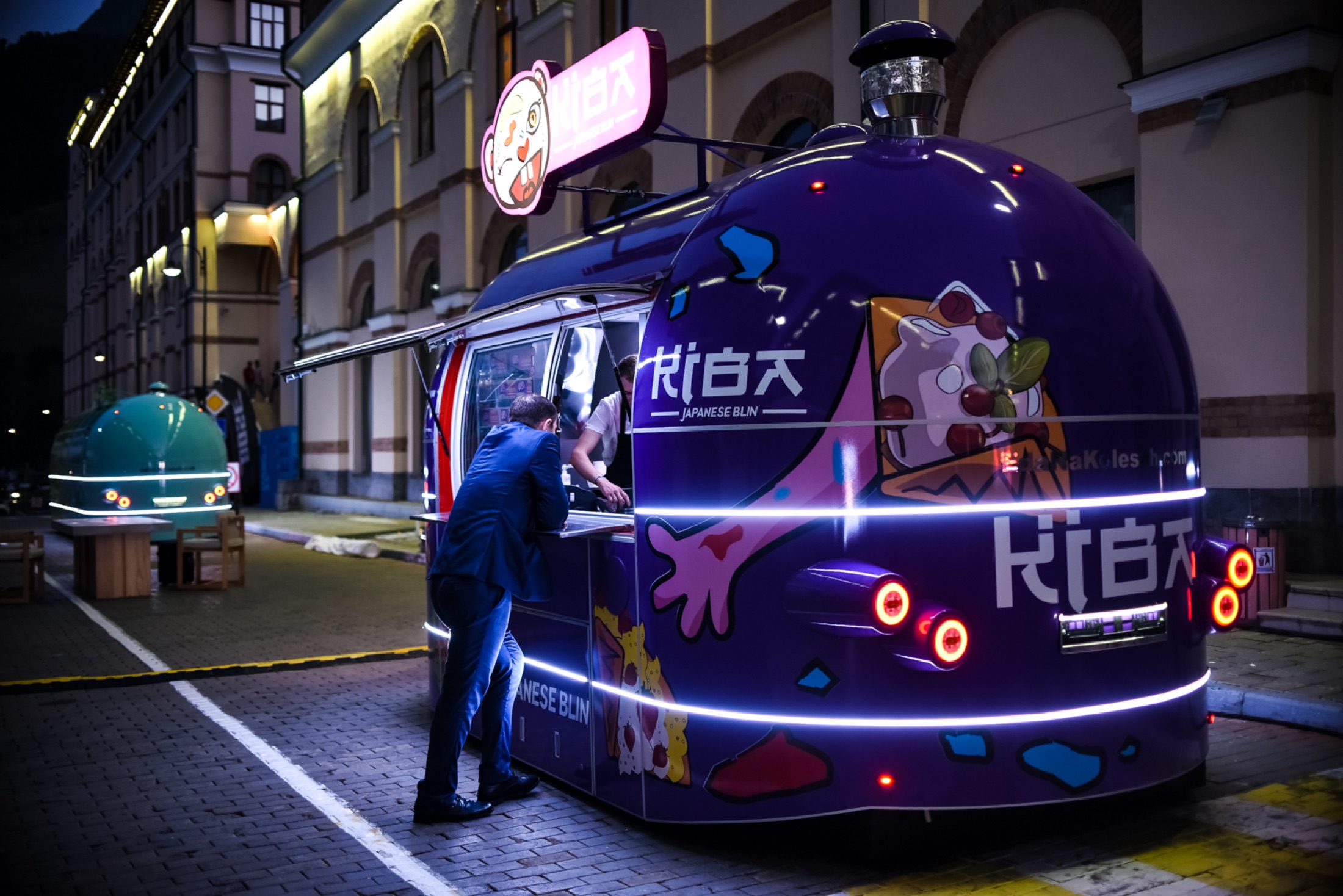 Builder handoff
 Related fry-line guide