
Mobile office comparison · Source review November 5, 2026
A connected office is not simply a bigger version of one trailer. It changes the project from placing one mobile room to coordinating a wider workplace with a defined module connection, site assembly, utility interfaces and a larger acceptance scope.
Choose a single unit when one room can support the actual workday and frequent movement or simple placement matters. Consider connected modules when simultaneous activities genuinely need separation and the site, crew and contract can support the added setup work. Headcount alone is a weak reason to choose either path.
Use the downloadable decision record on this page to compare the two patterns with the same operating case. Mark each input confirmed, assumption, open or not applicable, name its owner and attach the source file. The record supports a project review; it is not a final layout, transport plan, engineering release, vehicle-certification decision, price or schedule commitment.
The selected photograph shows a real MOBITRUCK connected-office interior with a meeting area, a partition and a separate seating zone. It demonstrates that distinct work zones can exist inside a connected office. It does not establish the model, dimensions, occupancy, transport method, connection design, site approval or scope for another unit.
01Start with the conflicts in one ordinary day
Write down the work that must happen at the same time. A private call and a six-person plan review can conflict even when the total headcount is low. Twelve people performing the same short briefing may need less separation than four people handling reception, confidential conversations and focused desk work.
Use time blocks rather than a room wish list. For each block, record who is present, who visits, what must remain private, what equipment is active and which activity cannot share a zone. The decision is ready only when the buyer can explain why a second room changes the operation.
If the conflicts can be resolved through scheduling, movable furniture or one enclosed room, a single unit may remain the cleaner deployment. If the ordinary day requires reception, private meetings and team work to run together, a connected plan may deserve review.
02Compare the deployment patterns
| Decision factor | Single mobile office | Connected two-module office | Evidence to attach |
|---|---|---|---|
| Workday | One coordinated room or a compact divided plan | Simultaneous zones that need real separation | Activity map by time block |
| Movement | One unit to release, move, receive and reopen | Each transported section and the completed connected state must be planned | Move frequency and route assumptions |
| Site envelope | One placement area plus the required access and setup space | Wider final footprint plus room for positioning and connection work | Dimensioned site plan and approach photographs |
| Setup scope | Position, stabilize, connect assigned services and complete checks | Position modules, execute the documented connection scope, connect services and commission the assembled workplace | Setup responsibility matrix |
| Utilities | One coordinated entry and distribution concept | Connection points and cross-module routes must be defined in the released design | Equipment schedule and utility diagram |
| Acceptance | One occupied-use test against the agreed scope | Module connection, weather enclosure, finishes, systems and occupied use need a combined acceptance record | Signed test and closeout schedule |
| Change control | A late partition or opening change affects one coordinated shell | A late change can affect both modules, their interface and the site plan | Revision log with affected interfaces |
This table does not declare that one path is cheaper or faster. Pricing and schedule depend on the actual configuration, site, completion scope and responsible companies.
03Treat the connection as contracted work
The archived MobiCube 6×2 Office and MobiCube 8×2 Office pages describe two-module directions. That language matters. A connected workplace needs a released definition of how the modules meet, who performs the site assembly, which finishes and systems cross the interface and how the completed condition is accepted.
Ask for the connection scope in nouns and records, not adjectives. The proposal should identify the supplied structural and weather-enclosure work, interior closure, floor and ceiling transitions, electrical or communications routes, climate-system coordination and any site work assigned to others. The responsible designer and builder determine the actual details.
Do not accept modular setup included as the entire boundary. Name the crew, the site prerequisites, the excluded work, the inspection or test evidence and the condition in which the owner receives the office.
04Keep transport state separate from occupied state
A drawing of the finished connected office does not show how its transported sections arrive, how they are identified or what must happen before people can work inside. Record both states.
For transport, list each section, its unit-specific records, assigned carrier review, travel configuration and loose or removed items. For setup, identify the placement order, working area, equipment and crew assumptions. For occupied use, record the approved room program, utilities, access route, equipment and acceptance checks.
MOBITRUCK prepares the contracted shell system at its manufacturing operation in Estonia. In the current U.S. path, Concession Nation assembles the rolling shell, assigns the American VIN and performs the applicable vehicle-certification work assigned to its stage. Concession Nation or another qualified U.S. builder may complete the office application under a separate written scope.
The actual vehicle records control the manufacturer and certification roles. NHTSA explains that trailers manufactured for sale in the United States require manufacturer and VIN information and a certification label. For multi-stage work, 49 CFR Parts 567 and 568 define certification and manufacturer-stage responsibilities. The buyer should not infer those roles from the words single, connected or turnkey.
05Build the site packet before selecting the wider plan
The connected option should survive a real-site review before it becomes the purchasing assumption. Provide a dimensioned placement area, the route from the street, gate and turning constraints, overhead conditions, surface and drainage information, utility locations, working hours and the area available for assembly.
Then name who controls the site. The property owner, general contractor, event producer or developer may impose different access, insurance, work-hour and restoration conditions. Those requirements do not become the shell manufacturer’s responsibility unless the written scope assigns them.
If the operating sites are not known, define an honest site envelope and mark it as an assumption. A connected plan that works at one wide, level property may not be a repeatable touring solution.
06Make the decision with release conditions
A useful decision memo ends with conditions, not a preference.
Choose the single-unit path when the activity map fits, the planned move pattern rewards a simpler deployment and the unresolved room conflicts do not justify a second module. Release it only after the site, equipment and completion boundaries are documented.
Choose the connected path when simultaneous zones are necessary, the intended sites can support the final footprint and assembly work, and named parties accept the connection, utility, transport and closeout responsibilities. Keep it open when any of those conditions lacks an owner or source record.
Download the mobile office deployment decision record (CSV)
Complete the record with the mobile office trailer buying guide, then compare the current mobile office solution, MobiCube 6 Office, MobiCube 6×2 Office and MobiCube 8×2 Office pages. Archived model data is reference context; the current proposal, drawings and unit records control the project.
Request a mobile office project review with the ordinary-day activity map, intended sites, move pattern and completed decision record. The review can then identify which deployment pattern is ready for configured scope work and which assumptions still need an owner.
07Sources checked November 5, 2026
- NHTSA: Importation and Certification FAQs for trailers and heavy trucks: current manufacturer, VIN-information and trailer-sale requirements.
- Electronic Code of Federal Regulations: 49 CFR Part 567 and 49 CFR Part 568: certification, incomplete-vehicle documentation and manufacturer-stage responsibilities.
- MOBITRUCK mobile offices: current mobile-office application and planning context.
- MobiCube 6 Office, MobiCube 6×2 Office and MobiCube 8×2 Office: current presentation of single-unit and connected office directions, with archived measurements identified as reference data.
- MOBITRUCK manufacturing: current Estonia shell-system and U.S. rolling-shell / final-completion responsibility sequence.

 Single-unit reference
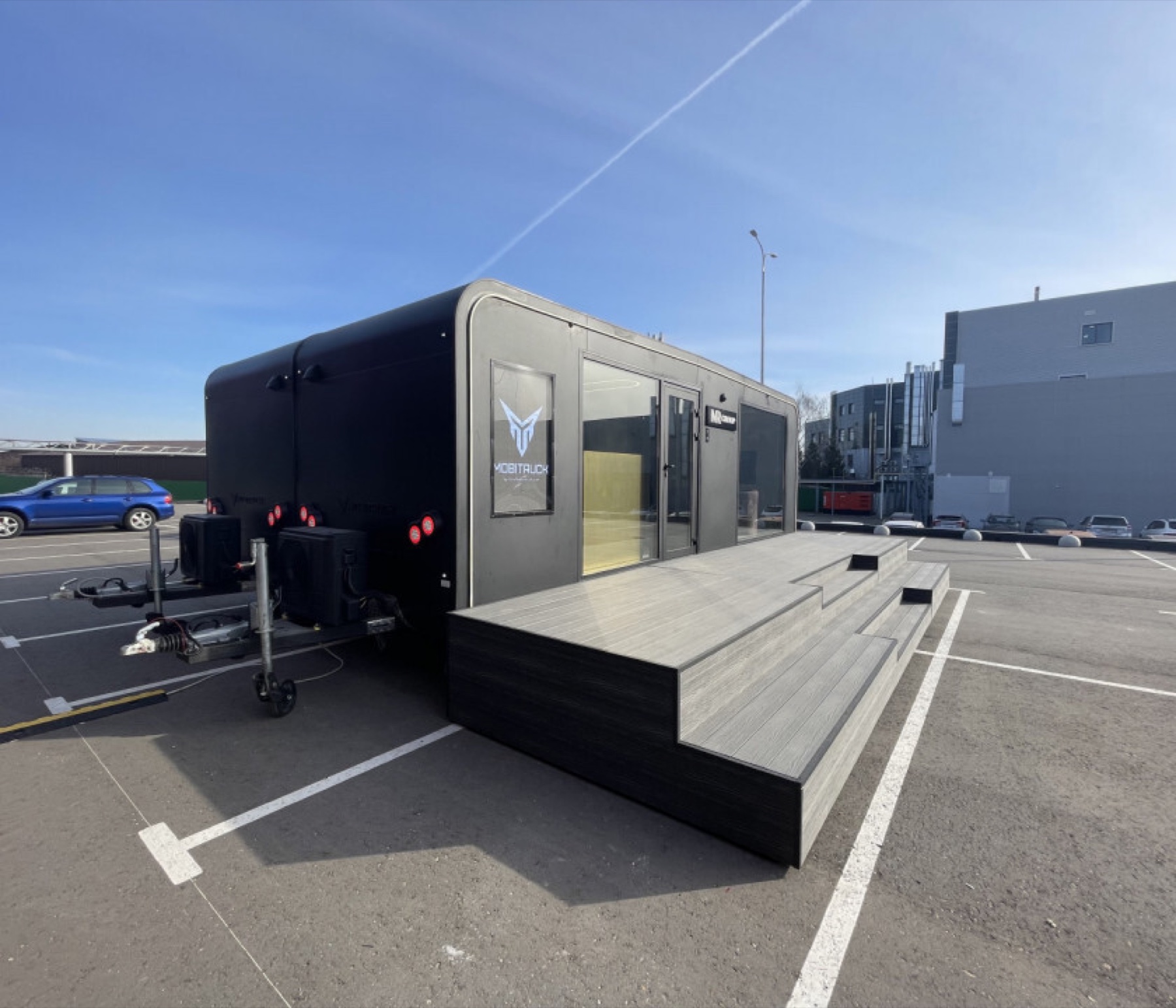 Connected-office reference